

Meet a researcher
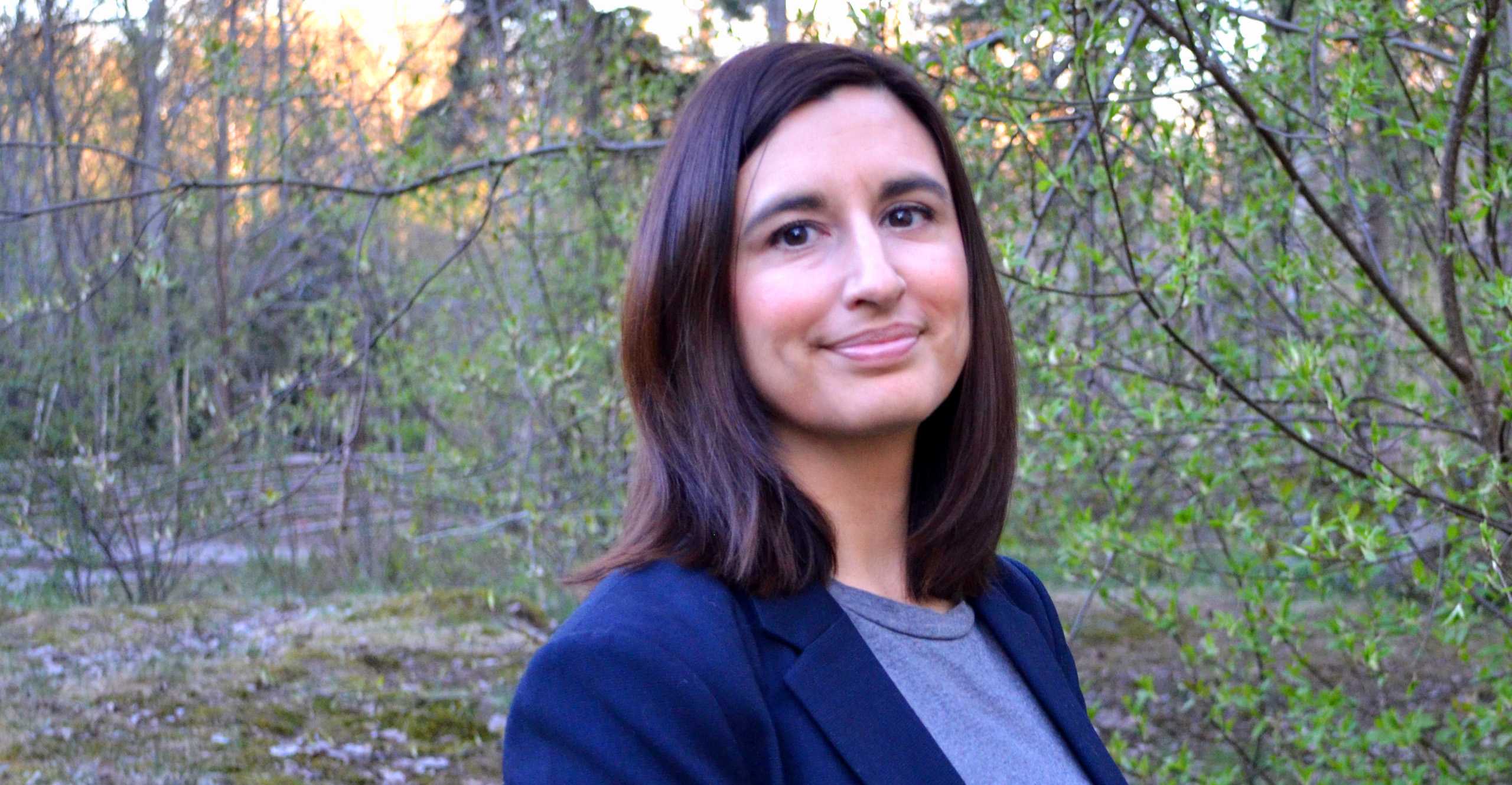
“Sweden and the world are facing a wide range of crises and complex challenges, and there is a great need for research-based knowledge to find new and effective solutions.
Today, several Swedish organisations work in engineering, natural sciences and medicine to facilitate collaboration between decision-makers and researchers. Initiatives focusing on the humanities and social sciences, however, are few. KRAFT aims to change this,” says Monica.
Research that makes a difference
KRAFT explores how knowledge can contribute to a better-functioning society. Its focus is on making research understandable, useful and relevant, while also being able to provide reliable evidence quickly to the Swedish parliament and government. KRAFT is a Swedish acronym for knowledge, advice, analysis, research and application.
“We want to translate research findings into insights that can inform policymakers’ work and build trust between different stakeholders,” Monica explains.
Monica leads the work at KRAFT, which is affiliated with the Institute for Futures Studies.
“The initiative grew out of our recognition that a lack of dialogue created a risk that important perspectives would be missing from political decision-making and that societal problems would not be identified in time. KRAFT wants to ensure that research really reaches policymakers. We also want to improve the structural conditions for conducting high-quality, societally relevant research in the humanities and social sciences,” says Monica.
Interdisciplinary collaboration
Monica has extensive experience of this kind of cross-sector work. She has previously worked at the intersection of research, policymaking and public authorities, often on issues relating to migration, societal security and research policy. Her work has included research communication and policy issues, including at Delmi, the Migration Studies Delegation.
Monica holds a PhD in Political Science and wrote her doctoral thesis at the Swedish Defence University and Stockholm University, focusing on security policy and migration.
“That made me realise that I wanted to work with research without being a researcher myself. I wanted to work with the impact of research. I did this, for example, as acting head of the research and innovation unit at the Swedish Civil Defence Agency. I started there in 2022, when the war in Ukraine began, and my background proved particularly useful,” says Monica.
KRAFT organises seminars and round-table discussions that bring together researchers, politicians, civil servants and experts to address current societal issues. These may include, for example, how technological and biological advances or developments in security policy affect people and society, as well as the policy choices that arise from these changes.
“Because many societal challenges are complex, we bring together researchers from different fields, such as economic sciences, sociology, history and philosophy. The idea is to combine perspectives to generate knowledge that is more useful in practice,” says Monica.
“Being involved in building KRAFT is both exciting and important. It is about creating opportunities for mutual learning between researchers and policymakers, enabling everyone involved to engage with research and helping to build knowledge-informed policy, which is fundamental to a democracy,” Monica concludes.
KRAFT represents research in social sciences and humanities as a field of knowledge rather than individual universities or research institutes. Its activities are politically and ideologically independent. KRAFT does not advocate specific positions on policy issues outside the field of research policy. Read more on its website.
Last year, the foundation awarded KRAFT a three-year grant to establish its activities.
Under the heading Meet a Researcher, we publish interviews with researchers who have received funding from the foundation. Earlier this year, we interviewed Daniela Calvigioni, Autilia Arfwidsson and Emma Bell.
Last year, we interviewed Eszter Lakatos, Alexander Pietras, Julian Nowag, Hanna Almlöf, Konrad Burchardi, Sofia Lodén (Young Academy of Sweden) and Anni Carlsson.
In 2024, we interviewed Agnes Hellner, Anna Brattström, Erik Lindqvist, Suraya Kazi, Mia Phillipson, Wei-Li Hong, Vicente Pelechano and Annika Lindskog.


