

Meet a researcher
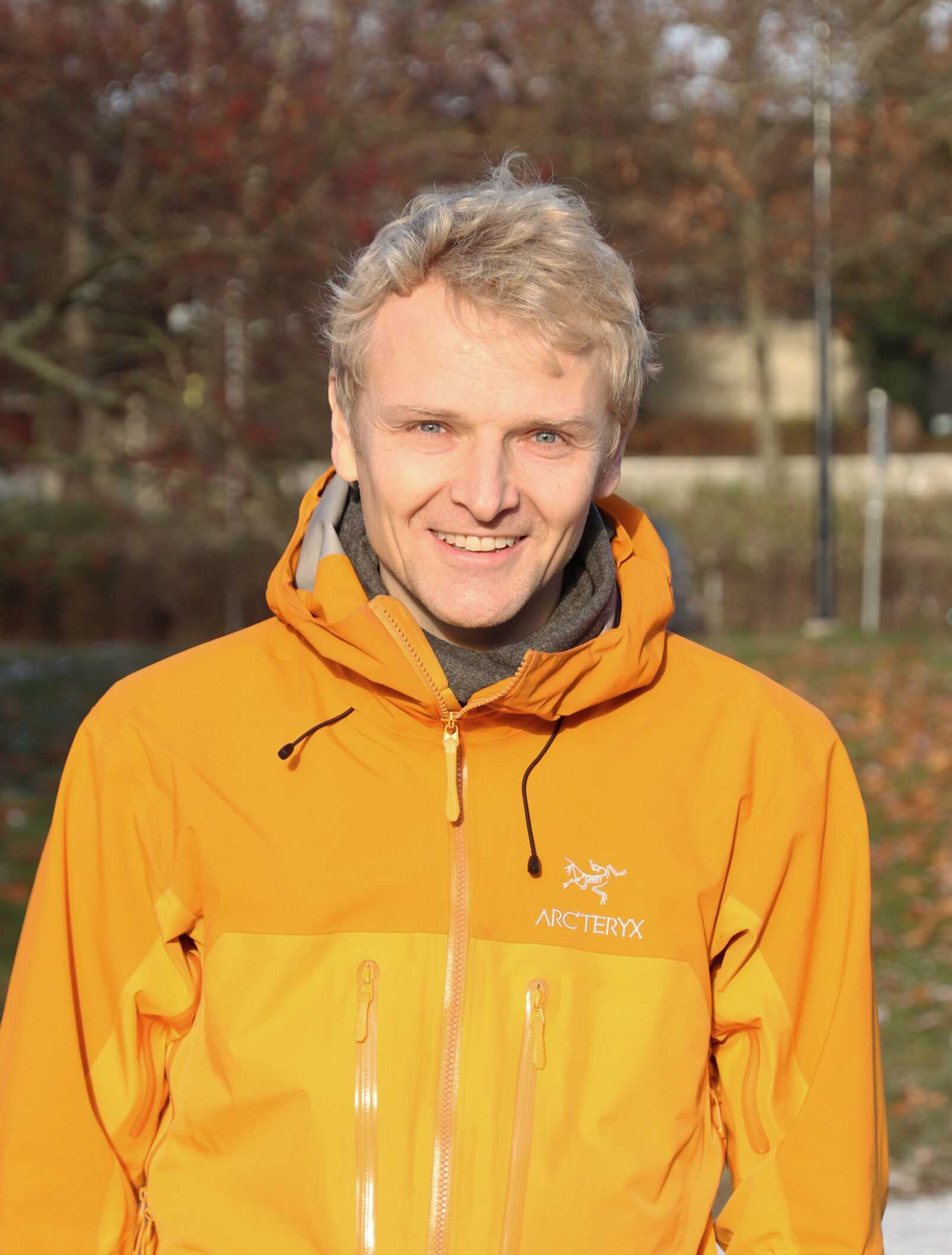
“I became fascinated early on by development economics and why some countries have better-functioning economies than others. My team is now studying Sweden’s rapid economic development before the First World War, a period of increasing market integration. There are strong indications that this development was partly driven by new modes of transport, such as railways and canals,” Konrad says.
“My research focuses on the process of economic growth and the importance of social structures for international economic development. Ten years ago, I became interested in the transformative processes that took place before and during the Industrial Revolution in Sweden. How did things work when people in small villages produced everything themselves, before specialisation began to take off?” Konrad asks.
Combining historical data with new models
It is clear that market integration and specialisation are still lacking in many developing countries today. The research group therefore began exploring how historical information could be used to understand the importance of market integration for rapid economic transformation in these countries.
“We found a unique collection of handwritten data from manufacturing firms in Sweden dating from before the Industrial Revolution. The material is known as Fabriksberättelserna. To understand how market integration affects growth, productivity and the allocation of resources between firms, we need data on the geographical distribution of economic activity. We also need information about transport networks. We found this historical data in Fabriksberättelserna,” Konrad says.
A grant from Ragnar Söderberg foundation provided the starting point
In 2016, Konrad received a grant from Ragnar Söderberg foundation for the project Market Integration and Economic Development, which addressed the considerable income disparities between rich and poor countries. The research project examined how a lack of market integration affects economic development.
“Two central questions are why economic differences between countries arise and why they persist. Economic models often assume that markets function well, but subsistence production is common in many low-income countries and price variations are substantial, indicating a lack of integration,” Konrad explains.
The work on the Fabriksberättelserna database is a collaboration between the Department of Economic History at Lund University and the Institute for International Economic Studies (IIES) at Stockholm University.
“At the foundation’s annual meeting in 2016, we met researchers from Lund with similar interests, which led to our collaboration. Thanks to new joint grants, we were able to employ research assistants who began compiling the information in digital form,” Konrad says.
Fabriksberättelserna – documenting Sweden’s industrial history
The research group has built an extensive historical database containing digitised, geocoded and linked data from Swedish factories between 1750 and 1900. They have data for all Swedish towns at ten-year intervals from 1750 to 1900, as well as annual data for the whole of Sweden from 1838 to 1900. Data from additional years will be added.
“We have digitised historical data from Swedish factories and are making it available to other researchers and the public. The database is a unique resource for studying the transformation of Swedish industry. Fabriksberättelsernacontains the world’s oldest industrial statistics, making it possible to track individual factories over time,” Konrad explains.
The information was originally collected by the Swedish National Board of Trade to monitor the development of Swedish industry. It includes microdata such as the name of the factory, its owner, type and volume of production, and customs duties as a measure of production value. From 1863 onwards, the records also contain information about sources of power, including steam, hydropower and electricity.
Several projects underway
Konrad’s research group is working on several projects using the data. One of these, Market Integration and Structural Transformation, examines differences between developing and high-income countries in terms of production scale, technology and market integration.
The project aims to develop new theories of economic development and test existing ones, using methods designed to shed light on Sweden’s transformation from one of Europe’s poorest countries into one of the world’s wealthiest between 1839 and 1900.
“Transport infrastructure is an important means of improving market integration in poor countries. The World Bank spends more on transport infrastructure than on education, health and social services combined. Despite this, there is limited research on how the structure of production changes as a result of increased market integration,” Konrad says.
Fourteen years in Stockholm
Konrad is from Hamburg and studied in Munich, followed by studies in France and seven years at the London School of Economics and Political Science (LSE), before moving to Stockholm in 2011.
“I began my academic career by studying business, but I soon became interested in economic issues. Ultimately, business is about how to make money. Economic sciences, on the other hand, are about how people behave and how society’s rules can be designed to maximise people’s well-being. That was something that really captured my interest,” Konrad concludes.
Konrad has published in several of the five leading journals in economic sciences and was awarded an ERC Consolidator Grant in 2023 for the project “Agricultural Productivity and Technology Adoption in Sub-Saharan Africa (ADAPT)”. You can read more about Konrad’s ongoing research projects at www.historicalmanufacturingcensus.se.
Under the heading Meet a researcher, we publish interviews with researchers who have received grants from the foundation. This is the third researcher profile of the year. Previous interviews this year have featured Julian Nowag and Hanna Almlöf.
Last year, we interviewed Agnes Hellner, Anna Brattström, Erik Lindqvist, Suraya Kazi, Mia Phillipson, Wei-Li Hong, Vicente Pelechano and Annika Lindskog.


