

Meet a researcher
Better methods for evaluating evidence
Legal scholar and researcher Moa Lidén is developing a new scientific foundation for the evaluation of evidence in criminal cases. Her research lies at the intersection of law, psychology and forensic science, focusing on how improved methods of assessing evidence can reduce the risk of wrongful convictions.
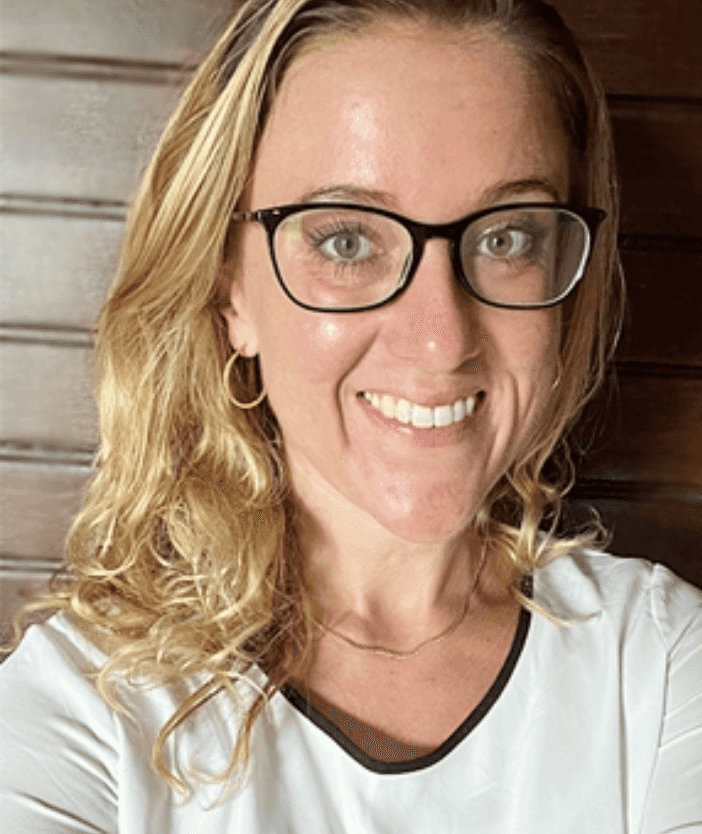
“We investigate how reliable and objective different types of evidence are, and how potential weaknesses can be identified and addressed. Understanding possible sources of error is crucial to legal certainty,” says Moa, associate professor and senior lecturer in evidence-based procedural law at the Department of Law at Uppsala University.
Moa’s overall aim is to contribute to a more evidence-based approach to criminal law, providing courts, prosecutors and police with scientifically grounded methods for assessing evidence. Rather than focusing solely on legal rules, she investigates how different types of evidence actually work in practice.
Interdisciplinary research to support legal practice
Evidence-based criminal law is an interdisciplinary field of legal scholarship that aims to help police officers, prosecutors, forensic pathologists and judges take a more scientific approach to evidence.
“In a courtroom, witness testimony, data and technical analyses are all considered. The court assesses statements and evaluates technical evidence. Judges generally trust that a DNA result is reliable. But if the same sample is analysed in different ways, it can produce different results,” Moa explains.
Moa is the director and principal investigator of the interdisciplinary research centre EB-CRIME, the International Center for Evidence-Based Criminal Law, at Uppsala University. The centre brings together legal scholars and researchers in fields including forensic genetics, forensic medicine, forensic anthropology, psychology, AI and information technology. Research at EB-CRIME includes areas such as eyewitness psychology, DNA and AI technology and is funded by grants from the Swedish Research Council. The main focus is on six common types of evidence: oral testimony, digital evidence, molecular diagnostics, forensic medicine, forensic anthropology and age assessments.
Identifying sources of error
EB-CRIME works to identify sources of error at several stages of the criminal justice process. The first concerns the methods and tools used in police investigations. For example, different software may produce different results. The next level involves the human factor. Police officers and forensic experts analyse data, which can lead to different interpretations. These differences are rarely visible by the time the evidence is presented in court, but they may affect how strong the evidence is perceived to be. The third level is the courtroom, where professional judges and lay judges must interpret the evidence. Forensic experts may believe that they are communicating something precise, but studies show that judges can interpret the same figure in different ways.
“Molecular diagnostics using DNA and protein analysis often provide important evidence in criminal cases, for example when determining the identity of a perpetrator, how many individuals were present at a crime scene or who handled a weapon. This includes visible evidence such as blood and hair, but also traces left when someone has touched an object or sat on a chair,” Moa explains.
AI as a tool
Oral testimony is assessed as evidence in courts around the world. In national courts, for example, cases in which one person’s word is set against another’s can be highly significant in suspected rape cases. Moa and her fellow researchers are now comparing automated language analysis with human assessments to investigate how accurately they can determine whether someone is lying or telling the truth. AI analysis can, for example, examine whether the length of a statement may indicate whether it is truthful or deceptive.
“We use and evaluate AI in many of our projects, including when assessing the age of living individuals. In Sweden, older methods such as X-rays of knees or teeth are often used. We are working with AI researchers and forensic geneticists to study how accurately people can assess someone’s age with the help of AI,” says Moa.
“My ambition is also to change and broaden the way legal professionals approach and research criminal cases. I want to develop a new subject within legal education – evidence-based criminal procedure – both in Sweden and internationally. We already provide training for practising professionals, including judges, and we want to take a comprehensive approach in which everything we do is reflected in legal education, so that everyone working in our field can see the bigger picture,” Moa explains.
The grant provided an important start
Moa received a postdoctoral grant in law from the Ragnar Söderberg foundation in 2019. She has also received funding from the Swedish Research Council for the EB-CRIME centre and has been awarded a Wallenberg Academy Fellowship. Moa holds degrees in both law from Uppsala University and psychology and legal psychology from Stockholm University. Since 2013, she has researched human sources of error in criminal cases.
“The grant from the Ragnar Söderberg foundation meant a great deal to me. I probably would not be working as a researcher today without it. As researchers, we are entirely dependent on the funding we receive, and the foundation gave me a strong start, a community in which I felt recognised, and many valuable contacts,” says Moa.
Moa is also an honorary research fellow at the Department of Security and Crime Science at University College London and a Pro Futura Scientia Fellow at the Swedish Collegium for Advanced Study (SCAS). She has now partly returned from parental leave with her six-month-old daughter Freja and is working half-time. The family divides its time between London, where both Moa and her husband work, and Uppsala, where Moa is based.
When she began her studies, Moa did not have a clear idea that she would pursue a career in law. During law school, however, she became interested in the intersection between psychology and law in the criminal justice process.
“When I started studying, I had no particular idea that I would work as a lawyer, but I thought the degree would open many doors. One course on evidence in criminal and procedural law was particularly interesting. It covered the aspects traditionally regarded as important in law, with a focus on legal provisions and principles, but above all it inspired me to explore further the human factors inherent in the criminal justice process. I also spent some time working in a court, dealing with both criminal and civil cases, before moving into research full-time,” Moa concludes.
Under the heading Meet a Researcher, we publish interviews with researchers who have received funding from the foundation. Earlier this year, we interviewed Jaakko Meriläinen, Céline Zipfel and Jay Eui Jung Lee, Antoaneta Momcheva and Iman Parsa, Monica Svantesson, Daniela Calvigioni, Autilia Arfwidsson and Emma Bell.
Last year, we interviewed Eszter Lakatos, Alexander Pietras, Julian Nowag, Hanna Almlöf, Konrad Burchardi, Sofia Lodén (Young Academy of Sweden) and Anni Carlsson.
In 2024, we interviewed Agnes Hellner, Anna Brattström, Erik Lindqvist, Suraya Kazi, Mia Phillipson, Wei-Li Hong, Vicente Pelechano and Annika Lindskog.


