

Meet a researcher
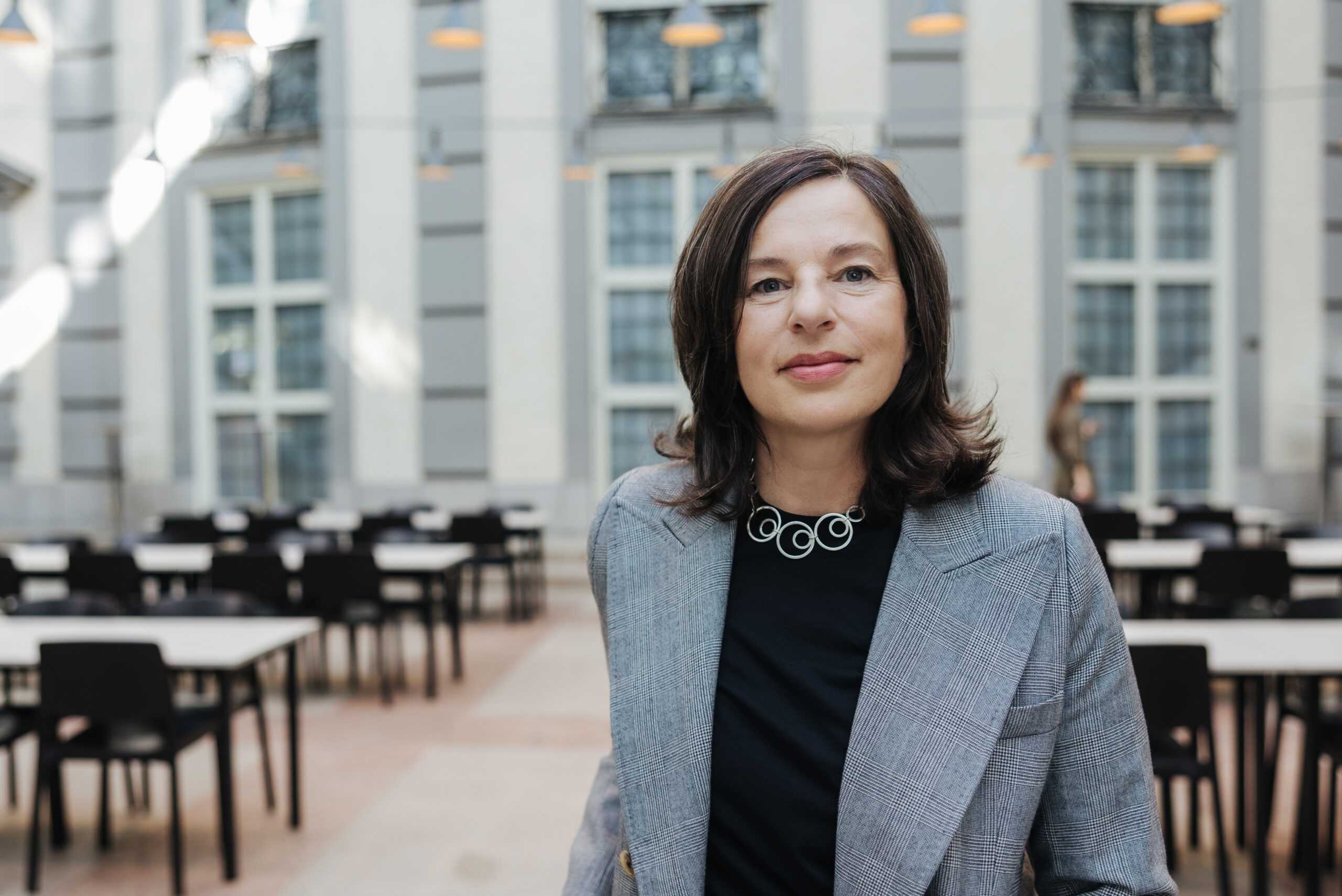
“My research explores how culture, power and emotions shape leadership and how our perceptions of leaders change over time. For me, leadership is more than a title; it is a kind of social performance that is closely observed by others, at work, in politics and on social media. How we view leaders in society more broadly also influences what we expect of leaders within our organisations,” says Emma Bell.
“At a time when leadership in both politics and business is coming under increasingly close scrutiny, understanding how leadership and power work is becoming ever more important. Polarisation and rapid societal change affect both what people expect of their leaders and what leaders expect of themselves. Leadership is about power, but power can take many different forms. How leadership is practised and interpreted today reflects broader trends in society,” Emma explains.
Emma Bell holds the H.M. King Carl XVI Gustaf Professorship in Leadership at the Stockholm School of Economics. The professorship was established in 2023 to mark the King’s 50th anniversary on the throne. The Ragnar Söderberg foundation contributed funding together with several other foundations and private individuals.
Curiosity as a valuable foundation
Emma’s research has taken her around the world, and she has studied leadership and workplace culture in countries including India, the United Kingdom and the United States. Emma was born in the UK and moved frequently during her childhood with her mother, who was a teacher. They lived in Brazil and the United States, among other places. Emma moved to Sweden in February 2025.
“I think my experience of different cultures has developed my curiosity, which is a valuable quality for a researcher. In my research, I reflect on how my own identity influences what I study. I am a white English woman from a non-elite educational background who is now a professor of leadership at the Stockholm School of Economics.
“I see leadership as a way of relating to others. It is a way of being that makes it possible to bring groups together around shared goals. Leadership can take place at every level of an organisation and is not limited to people in senior positions,” says Emma.
Leadership as a craft
Leadership is also a kind of craft that involves sensing and responding through empathy and intuition, rather than relying solely on intellect, rational analysis and problem-solving. Leaders influence others both emotionally and cognitively. Yet the academic literature on leadership rarely captures these aspects.
“Take, for example, the situational leadership theories developed in the 1960s, which provided precise guidelines for how a leader should act in different situations – systematic approaches based on rules and mechanisms. Today, we can see that these earlier approaches to leadership and the traditional theories taught at universities no longer work in the same way,” says Emma.
Leaders are often expected to provide answers and point the way forward. Sometimes this is exactly what people want from leaders, because it helps alleviate their own feelings of uncertainty. This is particularly true in times of upheaval, such as climate change, economic crises and war. But major challenges require new models of leadership. Sometimes leadership means refraining from providing solutions and having the courage to challenge other people’s expectations, creating space for risk-taking.
“I appreciate the academic way of working in Sweden, where you are part of a team and part of a network. The same is true in Finland, where I have worked with Hanken School of Economics in Helsinki,” Emma says.
How young people experience and practise leadership
Emma is currently establishing a PhD project directly linked to her professorship.
“We are recruiting a PhD student for our project, which will focus on young people and leadership in the Nordic and Baltic countries,” says Emma. “The project will explore how young people experience and practise leadership, both as leaders and as employees. We will examine different approaches to leadership today, what constitutes good and poor leadership, the theories that exist and how these have developed historically.”
“A leader is no longer a romanticised saviour offering traditional solutions. We have undergone a historical paradigm shift in how we view leadership today.”
Do we view leadership differently in Sweden and other countries?
“I think foundations and philanthropists work differently in Sweden than in many other countries. I see a strong interest in academic research in Sweden. Compared with many other countries, the Swedish model is positive, long-term and broad,” says Emma.
“At a time of major challenges, the need for new and more responsible forms of leadership is growing. At the same time, traditional leadership models are being questioned because they often preserve established power structures. Research shows that younger generations are increasingly expressing new ideas about leadership – ideas that are more inclusive and more firmly rooted in action and engagement,” Emma explains.
“We want to find out how young people view the possibilities for making leadership more creative, empathetic and responsible. This may involve leadership development, young people’s relationship with activism and entrepreneurship, and how young leaders are portrayed and tell their stories in different media. The studies will take place in different settings across the Nordic and Baltic countries, where leadership is often characterised by high levels of trust, collaboration and less hierarchical structures,” Emma concludes.
Emma Bell received her PhD from Manchester Metropolitan University in 2000. She is currently Distinguished Visiting Professor at Hanken School of Economics and Honorary Professor at the University of St Andrews Business School. She is also the lead author of a leading research methods textbook used by business students around the world.
Under the heading Meet a Researcher, we publish interviews with researchers who have received funding from the foundation. This is our first researcher profile of the year.
Last year, we interviewed Eszter Lakatos, Alexander Pietras, Julian Nowag, Hanna Almlöf, Konrad Burchardi, Sofia Lodén (Young Academy of Sweden) and Anni Carlsson.
In 2024, we interviewed Agnes Hellner, Anna Brattström, Erik Lindqvist, Suraya Kazi, Mia Phillipson, Wei-Li Hong, Vicente Pelechano and Annika Lindskog.


