

Meet a researcher
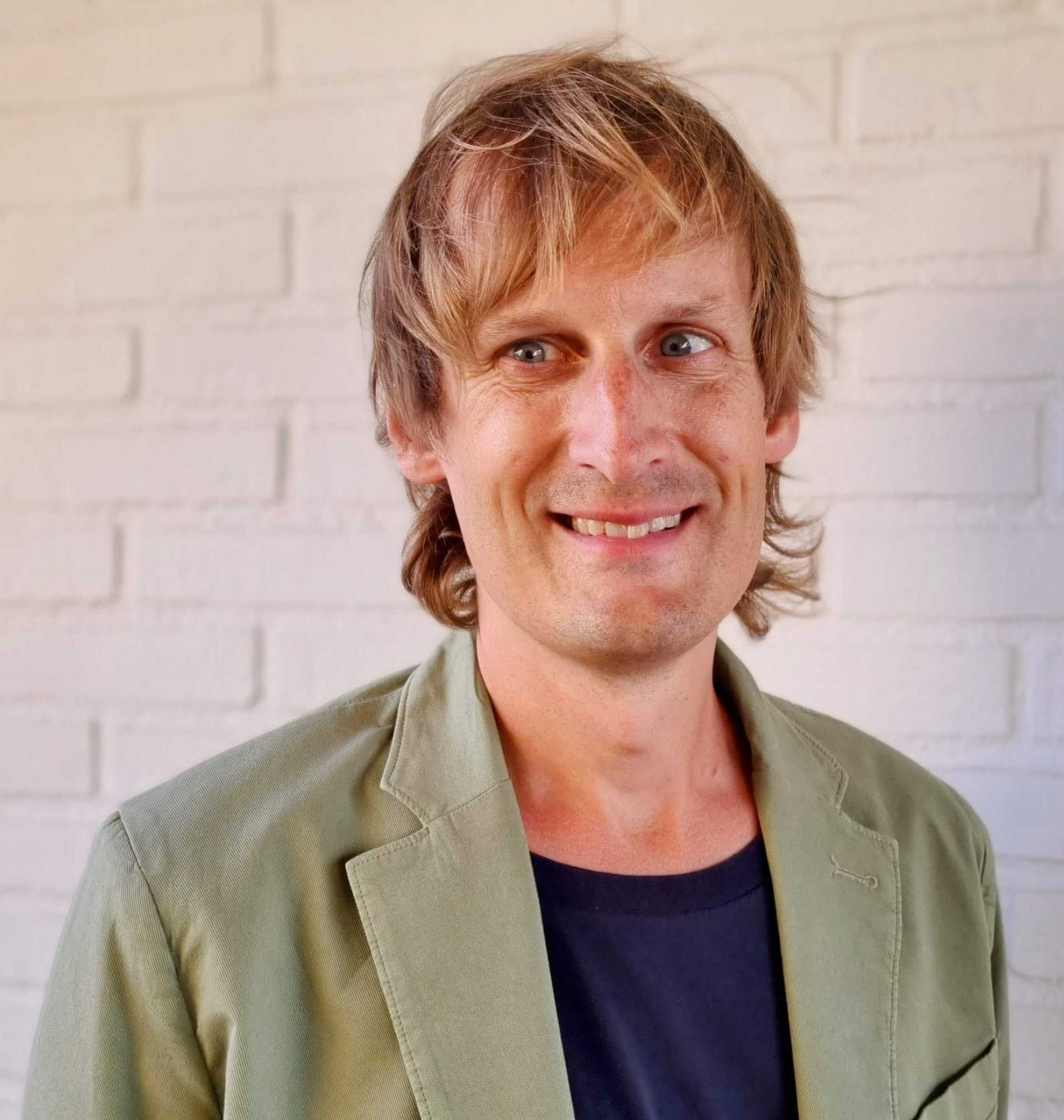
The most common type of brain tumour affecting adults is glioma. Patients with the most aggressive form, glioblastoma, undergo intensive treatment involving surgery, radiotherapy and chemotherapy. Even if a patient responds to treatment, the tumour almost always returns and is then often resistant to further treatment.
“On average, these patients survive for only 15 months. Given the poor prognosis for this patient group, there is a great need for new treatment approaches,” Alexander says.
Alexander Pietras’s research group has shown that standard radiotherapy of the primary tumour can shape the microenvironment in ways that promote tumour growth in recurrent tumours. They have found that tumour cells surviving treatment are located in specific areas of the tumour. When a patient undergoes radiotherapy, not only the tumour cells but also the surrounding healthy brain tissue is exposed to radiation. The research group has shown that this tissue can contribute to an environment that favours the tumour cells.
“Our research group believes that a deeper understanding of how radiation and hypoxia – a lack of oxygen in brain tissue – reprogramme the brain’s microenvironment could pave the way for new treatment strategies for aggressive gliomas,” Alexander says.
Finding new drugs
“In a large study, we have focused on one of the most common cell types in the brain, astrocytes, and found that they contribute to neighbouring tumour cells responding less effectively to treatment. When astrocytes are exposed to radiation, both their function and appearance change, and some of these changes can in turn support the survival of tumour cells,” Alexander explains.
The research group has screened thousands of substances that are already approved as drugs, as well as thousands of other molecules that they want to test.
“The aim is to identify experimental or already approved drugs that can block the astrocytes’ response to radiotherapy. Using existing drugs is faster than developing new ones. These drugs have already undergone the safety studies and clinical trials required for use in humans. In our latest study, we found that flunarizine can reduce the activity of certain brain cells and may have potential as a treatment for glioblastoma,” Alexander says.
Successful conference at the Royal Swedish Academy of Sciences
“I recently helped organise the Brain Tumor Plasticity conference at the Royal Swedish Academy of Sciences. A great deal has happened in the field of brain tumours in recent years. The purpose of the conference was to bring together the areas in which the greatest advances have been made.”
Research increasingly shows that brain tumours can vary considerably in their appearance and behaviour. Tumour cells can also change over time, making them more difficult to understand and treat.
“At the conference, we focused on how the ability of brain tumours to change affects tumour progression. We discussed how different types of tumour cells coexist and interact with their surroundings, and how this contributes to the tumour’s ability to resist treatment. We also discussed opportunities to develop new treatments by targeting the molecules that regulate this plasticity,” Alexander says.
The topics covered during the day included cancer and neuroscience, data-driven insights into brain tumour progression, and the evolving microenvironment of brain tumours.
“The last of these is my specialist field and what my lab and I work on every day.”
“We focus on how brain tumours interact with their surroundings. Radiotherapy affects the entire cellular environment, much like an ecosystem. Different components are affected in different ways, and we study how we can use this knowledge to guide tumour treatment,” Alexander says.
“The conference at the Royal Swedish Academy of Sciences was a great success – a fantastic day that opened up major opportunities for us as researchers. Being able to benefit from the Academy’s reputation and the foundation’s involvement also helped us attract some of the leading names in the field,” Alexander says.
Ragnar Söderberg researcher in medicine
Alexander was awarded a Ragnar Söderberg Fellowship in medicine in 2016, providing SEK 8 million in research funding over five years.
“My interest in medicine came about largely by chance. I enjoyed the natural sciences but not mathematics, and I was not interested in becoming a doctor. So I chose biomedicine instead! During my studies, the research environment that appealed to me most focused on cancer tumours. It is a field that is easy to become enthusiastic about and where there is still a great deal to be done. After completing my PhD, I undertook a postdoctoral fellowship in neuro-oncology in New York, and brain tumours subsequently became my main area of research,” Alexander concludes.
Alexander Pietras is one of three researchers who have been given the opportunity to organise a scientific conference at the Royal Swedish Academy of Sciences through a grant from the foundation to the Academy.
Under the heading Meet a researcher, we publish interviews with researchers who have received grants from the foundation. This is the fifth researcher profile of the year. Previous interviews this year have featured Julian Nowag, Hanna Almlöf, Konrad Burchardi, Sofia Lodén (the Young Academy of Sweden) and Anni Carlsson.
Last year, we interviewed Agnes Hellner, Anna Brattström, Erik Lindqvist, Suraya Kazi, Mia Phillipson, Wei-Li Hong, Vicente Pelechano and Annika Lindskog.


