

Meet a researcher
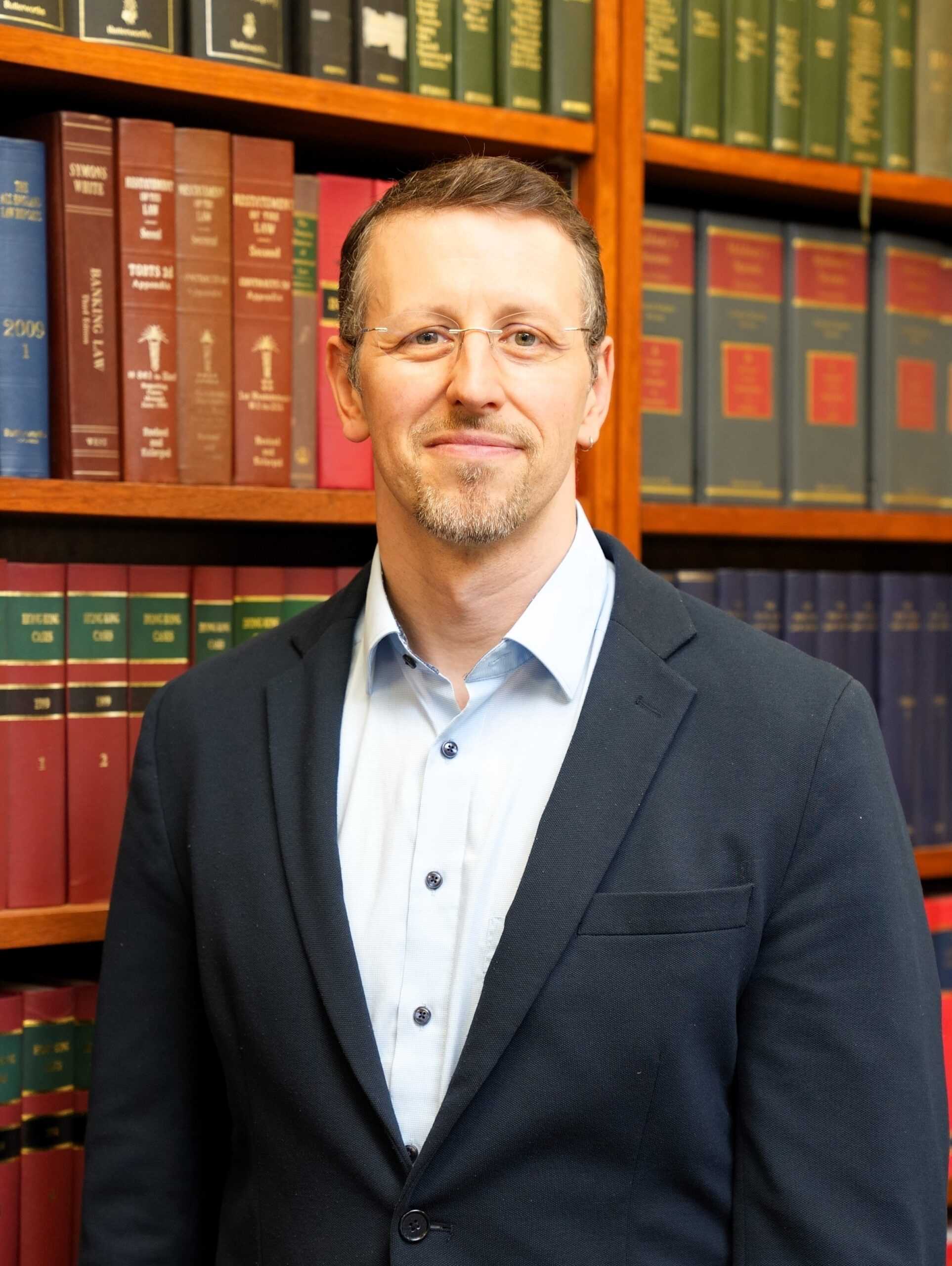
“The question of whether competition can be used as a tool to combat climate change and thereby promote sustainability has sparked lively debate among policymakers and academics, particularly in Europe,” Julian says.
Growing interest from the business community
Sustainability is becoming increasingly important to businesses, and efforts to make business activities more sustainable are becoming more common. Competition authorities around the world are increasingly confronted with questions concerning sustainability and competition. In addition, EU competition law requires sustainability considerations to be integrated, leading to further discussion about how to balance competition with environmental benefits.
While measures taken by companies can contribute to sustainability, they can also have negative effects. Competition authorities can promote sustainability by combating cartels that harm the environment or by protecting sustainable innovation. One example is the case involving diesel car manufacturers that restricted the development of cleaner technology a few years ago and were subsequently fined heavily by the European Commission.
Focus on developing countries
“My interest in environmental protection and competition law began during my doctoral studies at Oxford in 2009, when I researched the relationship between environmental protection and competition. As sustainability and climate change have gained international importance, it felt like a natural step. I am currently working primarily on competition and sustainability in other legal systems, with a particular focus on developing countries,” Julian says. He believes that a nuanced and inclusive competition policy can promote innovation, fairness and long-term environmental benefits.
Law was the obvious choice
“I was born in Germany and knew as early as secondary school that I wanted to study law. A friend once said that being a lawyer is like practising martial arts for adults. But I never thought I would become an academic. My most important educational experiences came during the final years of my law degree in Germany and during my doctoral studies at Oxford. During my master’s degree in Durham, I realised that I was not particularly interested in the ‘little tricks’ or in knowing the latest court cases. Instead, I wanted to understand why things were the way they were and how they related to broader legal principles, such as the constitution. This inevitably leads from the question of ‘what is the law?’ to ‘why is the law like this?’ and ultimately to ‘should the law be like this?’” Julian says.
AI and competition
Julian’s current research includes how algorithms affect competition law, particularly in situations where companies with significant market power abuse their position. Algorithms can make it easier for these companies to employ strategies that harm competition, for example through pricing, discounts and bundling strategies. These technological possibilities enabled by AI may change how competition law is interpreted and applied in practice.
“My work on AI and competition law examines how the nature of competition is changing as we enter the AI era. I have explored the extent to which established frameworks – for example, for determining what constitutes an abuse of a dominant position – can still be applied or need to be adapted when AI, rather than humans, becomes the main actor in the market,” Julian says.
Funding from the foundation to study the impact of EU law, competition law and labour law on the sharing economy
“The funding I received from Ragnar Söderberg foundation in 2017 was crucial in enabling me to further develop my academic career. The foundation provided important support at a key stage in my career, allowing me to remain in Lund and secure a permanent position. Instead of searching for academic positions around the world, I was able to work on and develop several projects in sustainability and competition law, as well as AI and competition law,” Julian says.
Will you stay in Hong Kong?
“I came to Lund in 2014 and left in 2024. I do not know whether I will return to Lund. It is a possibility, but there are questions surrounding my career development. At the same time, it unfortunately became clear that it would be extremely difficult for my wife to find a suitable position, despite having been an academic at Oxford. We will decide at a later stage whether to move back,” Julian says.
“In Hong Kong, I have a role similar to the one I had in Lund. I teach and conduct research in competition law, including in my core areas: AI and competition law, and sustainability and competition law. I also have somewhat more time for research here, even without external funding, as well as a number of colleagues working in the same field,” Julian concludes.
Julian obtained his Master of Studies (MSt) and Doctor of Philosophy (DPhil) from the University of Oxford. He also completed an LLM in European Legal Studies at Durham University and undergraduate legal studies in Germany and Austria. At Lund University, he was programme director of the Master’s Programme in European Business Law and taught competition law and various areas of EU law.
Under the heading Meet a researcher, we publish interviews with researchers who have received grants from the foundation. This is the first researcher profile of the year.
Last year, we interviewed Agnes Hellner, Anna Brattström, Erik Lindqvist, Suraya Kazi, Mia Phillipson, Wei-Li Hong, Vicente Pelechano and Annika Lindskog.


