

Meet a researcher
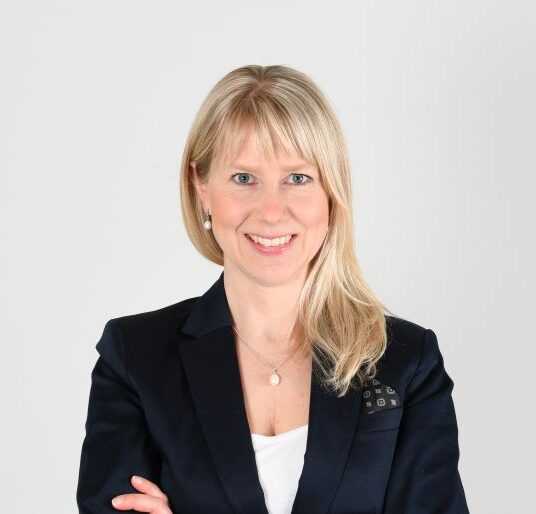
“Small business owners should be on every decision-maker’s list of priorities, because locally rooted businesses are essential for sustainable, long-term development throughout Sweden,” Hanna says. “My field of research is company law, primarily limited company law, with a focus on owner-managed businesses, including family businesses. I study how the law can be adapted to the needs of owner-managed companies and how entrepreneurship can be conducted through foundations.”
Relatively limited knowledge about foundations
There are currently 19,000 foundations and 760,000 limited companies in Sweden. There is relatively little awareness that several major Swedish companies, such as Kavli and Vagabond, are owned by foundations. The well-known Wallenberg sphere also includes around 20 foundations. In Denmark, Novo Nordisk, which developed the highly successful drug Ozempic, is owned by a foundation. Other international examples include Carlsberg, Bosch and Rolex.
Ownership dynamics in limited companies
One of our research group’s projects focused on changes in the ownership structure of owner-managed limited companies, known as ownership dynamics. Among other things, we examined how changes in ownership could be regulated without adversely affecting the company. Changes in ownership may occur as a result of conflicts, divorce, illness or generational succession.
“We studied whether business owners prepare for changes in ownership, for example by drawing up shareholders’ agreements. The results of the study reveal several reasons why the necessary arrangements are not put in place. These include costs and difficulties in discussing such issues, as well as structural problems in the market for legal advice,” Hanna says.
Foundations for entrepreneurs
“In another interdisciplinary research project, we are examining the conditions for entrepreneurship through foundations. We are studying how foundations are used for direct or indirect ownership of businesses and how such foundations can serve as long-term, active and responsible owners of family businesses,” Hanna explains.
“Among other things, we are examining how to achieve a successful generational transition in a business where the family does not want to, or cannot, take over. One way of protecting the business and keeping it in a particular location may be through a foundation. Alternatively, employees could use a foundation to continue running the business and have influence over it without owning it.”
“A foundation makes it possible to establish principles that will govern the organisation in the future, but it is important to take all possible circumstances into account when drafting the foundation deed. Drafting a good foundation deed is difficult, and many people are not even aware that this option exists,” Hanna says.
An interdisciplinary environment
These interdisciplinary research projects are based at the Centre for Family Entrepreneurship and Ownership (CeFEO) at Jönköping International Business School.
“Working in interdisciplinary environments is stimulating. Our combination of law and business administration is a key strength. We learn from one another and are able to keep the projects dynamic and productive. At the beginning of the foundation project, we were a small group of three researchers. Since then, the group has grown into an interdisciplinary project involving seven researchers: three in law and four in business administration. The group also includes two doctoral students. It is exciting to bring in early-career colleagues with new ideas,” Hanna says.
The project Conditions for Entrepreneurship through Foundations – Long-term and Sustainable Development in Rural Areas is funded by the Kamprad Family Foundation. The aim of the project is to determine whether, and if so how, a foundation can be used for the long-term and responsible ownership of local businesses.
“My research group is building a collection of examples of businesses in this field. We want to share good examples as well as lessons about what not to do when establishing a foundation,” Hanna says. “The Kamprad Family Foundation places great importance on disseminating research findings. We are continually trying to reach new and broader audiences through channels such as social media, seminars and other forms of communication.”
“The research group still has a great deal of work ahead of us, and we will soon apply for further funding to continue our work. We want to keep exploring, writing and learning from Sweden’s businesses and foundations,” Hanna says.
Grant from Ragnar Söderberg foundation
Hanna received a postdoctoral grant from Ragnar Söderberg foundation for the project Minority Protection in Owner-managed Limited Companies – Access to Information and Exit. The aim of the project was to analyse the minority protection provisions of the Swedish Companies Act from the perspective of owner-managed companies.
“Being part of the Ragnar Söderberg foundation network really feels like a privilege. I look forward to the annual meetings and to meeting the new grant recipients. They bring together a great mix of researchers and lead to many fascinating conversations. The grant I received from Ragnar Söderberg foundation in 2016 has been enormously important for my research,” Hanna concludes.
Svensk stiftelserätt is one of the outcomes of Hanna’s research. The book provides an accessible overview of Swedish foundation law, focusing on the aspects of civil law relevant to a foundation and its life cycle.
2023 Associate Professor of Commercial Law at the Department of Management and Engineering, Division of Commercial and Business Law, Linköping University.
2018 Senior Lecturer in Commercial Law, specialising in limited company law.
2016 Postdoctoral grant from Ragnar Söderberg foundation.
2014 Doctor of Laws in Commercial Law, Jönköping International Business School.
Under the heading Meet a researcher, we publish interviews with researchers who have received grants from the foundation. This is the second researcher profile of the year. Our previous interview this year featured Julian Nowag.
Last year, we interviewed Agnes Hellner, Anna Brattström, Erik Lindqvist, Suraya Kazi, Mia Phillipson, Wei-Li Hong, Vicente Pelechano and Annika Lindskog.


