

Meet a researcher
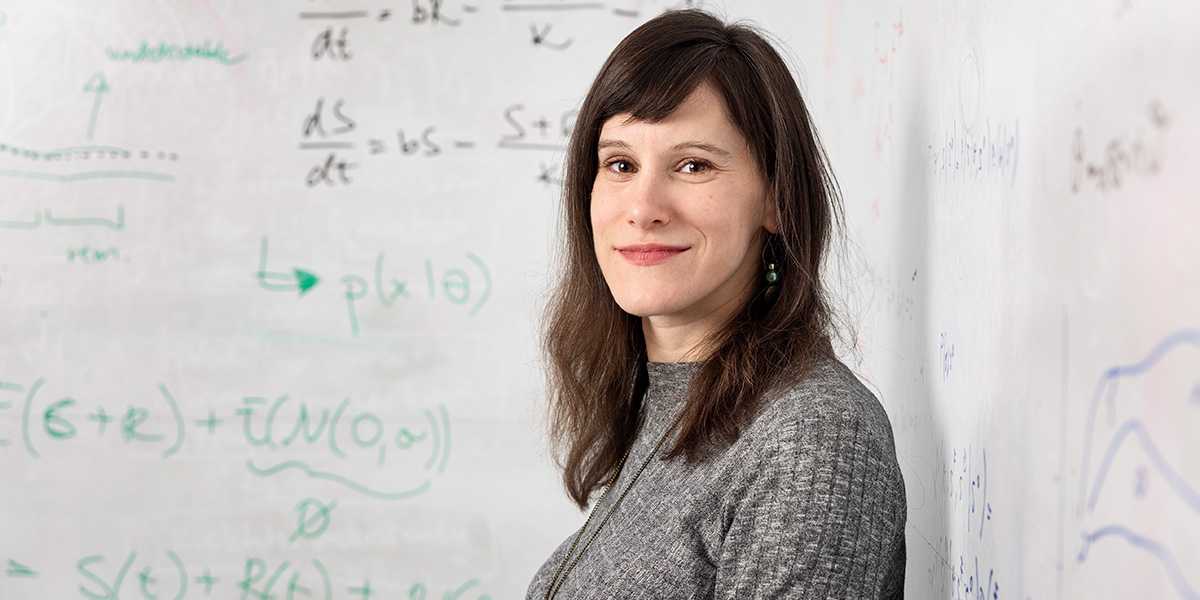
Photo: Sofia Sabel
Eszter is also an associate professor in computational biology and assistant professor at the Department of Mathematical Sciences. Her research lies at the intersection of mathematics, bioinformatics and cancer biology. She develops mathematical models and bioinformatics methods and works with next-generation DNA sequencing data.
“I am a computational biologist who uses mathematics and bioinformatics to understand biological processes in health and disease. The aim is to understand how tumours respond to the immune system and to treatments, and my motivation is to contribute to even better and more personalised treatments in the future,” says Eszter.
Swedish Foundations’ Starting Grant
In 2025, Eszter received a grant through the Swedish Foundations’ Starting Grant (SFSG), funded by the Ragnar Söderberg foundation. SFSG supports research of importance to Sweden and the EU.
“The project is called Redefining cancer immunogenicity at the systems level. I initially applied for an ERC Starting Grant but instead went on to receive funding through SFSG, for which I am very grateful,” Eszter explains.
In the SFSG project, Eszter’s research group will develop computational tools capable of analysing large volumes of data. Rather than focusing on a single mutation or a specific type of immune cell, they examine all possible molecules, both cancer-specific and healthy, that are present on the surface of cancer cells. The group is also investigating whether certain molecules can obscure others, meaning that only a small number are actually visible to immune cells.
“We will then study the different cell types found in and around the tumour and use mathematical methods to determine how strongly they interact. By combining these aspects, we will create a tool that can calculate an index indicating the ability to trigger an immune response, based on data that are often already available,” says Eszter.
Digital twins
In another project, the research group is creating “digital twins” – personalised computational models of real cancer cases. These models can be used to test how different therapies might be combined to identify the best possible treatment using the immune system. The group collaborates with the paediatric oncology department at Sahlgrenska University Hospital to understand what happens to a tumour during treatment, how it develops and whether it spreads.
Eszter joined Chalmers in April 2023. Before that, she lived in London, where she completed a PhD in systems biology, followed by a postdoctoral position in cancer biology.
“As a postdoctoral researcher, I studied how cancer changes over time and also looked at species and animals. This was where I began developing tools to better understand the immune system, which I have continued to develop at Chalmers,” says Eszter.
Eszter’s research group has sequenced DNA from both cancer patients and healthy individuals, generating very large amounts of data. This enables the researchers to study what distinguishes cancer cells from healthy cells. Sophisticated methods are needed to identify the differences that are genuinely significant.
“I work on identifying precisely these differences, how they change over time and how the cancer developed into what it is today. The aim is for us eventually to be able to predict how it will develop in the future,” Eszter explains.
Working across disciplines
Eszter leads the Computing Disease Evolution in Cancer (CODEc) research group at Chalmers.
“It is a very welcoming community, and I have many valuable discussions when collaborating with biologists and clinicians. When I hear about all the unresolved questions they work with every day and find something where I can genuinely help, I feel that this is exactly what I want to be doing,” says Eszter.
“The broader research field I work in, cancer genomics, is incredibly active, with many exciting developments. Interdisciplinary research is becoming increasingly common in our field. I can see how much a mathematician can contribute to biology. I think more people should talk to mathematicians, because sometimes we mathematicians solved a problem a long time ago – we just called it something else. In general, there should be even more dialogue between different scientific disciplines,” says Eszter.
“I really want more people to feel comfortable with mathematics, and I would like to see a world where you do not have to prove yourself more simply because of your gender or the colour of your skin. My father taught mathematics and wanted me to pursue it too. He encouraged me all the time. But I know that many people are told that they are not good at mathematics. I want more people to feel confident enough to continue to university, study mathematics and discover how much fun it can be,” Eszter concludes.
Eszter was awarded funding through the 2025 Swedish Foundations’ Starting Grant call. She holds an MSc in Infobionics Engineering from Pázmány Péter Catholic University in Hungary and a PhD in Theoretical Systems Biology from Imperial College London, where her thesis focused on stochastic analysis and control in molecular cell biology. Before joining Chalmers, Eszter was a postdoctoral researcher at Barts Cancer Institute and the Institute of Cancer Research in the UK.
funding from the foundation. Earlier this year, we interviewed Alexander Pietras, Julian Nowag, Hanna Almlöf, Konrad Burchardi, Sofia Lodén (Young Academy of Sweden) and Anni Carlsson.
Last year, we interviewed Agnes Hellner, Anna Brattström, Erik Lindqvist, Suraya Kazi, Mia Phillipson, Wei-Li Hong, Vicente Pelechano and Annika Lindskog.


