

Meet a researcher
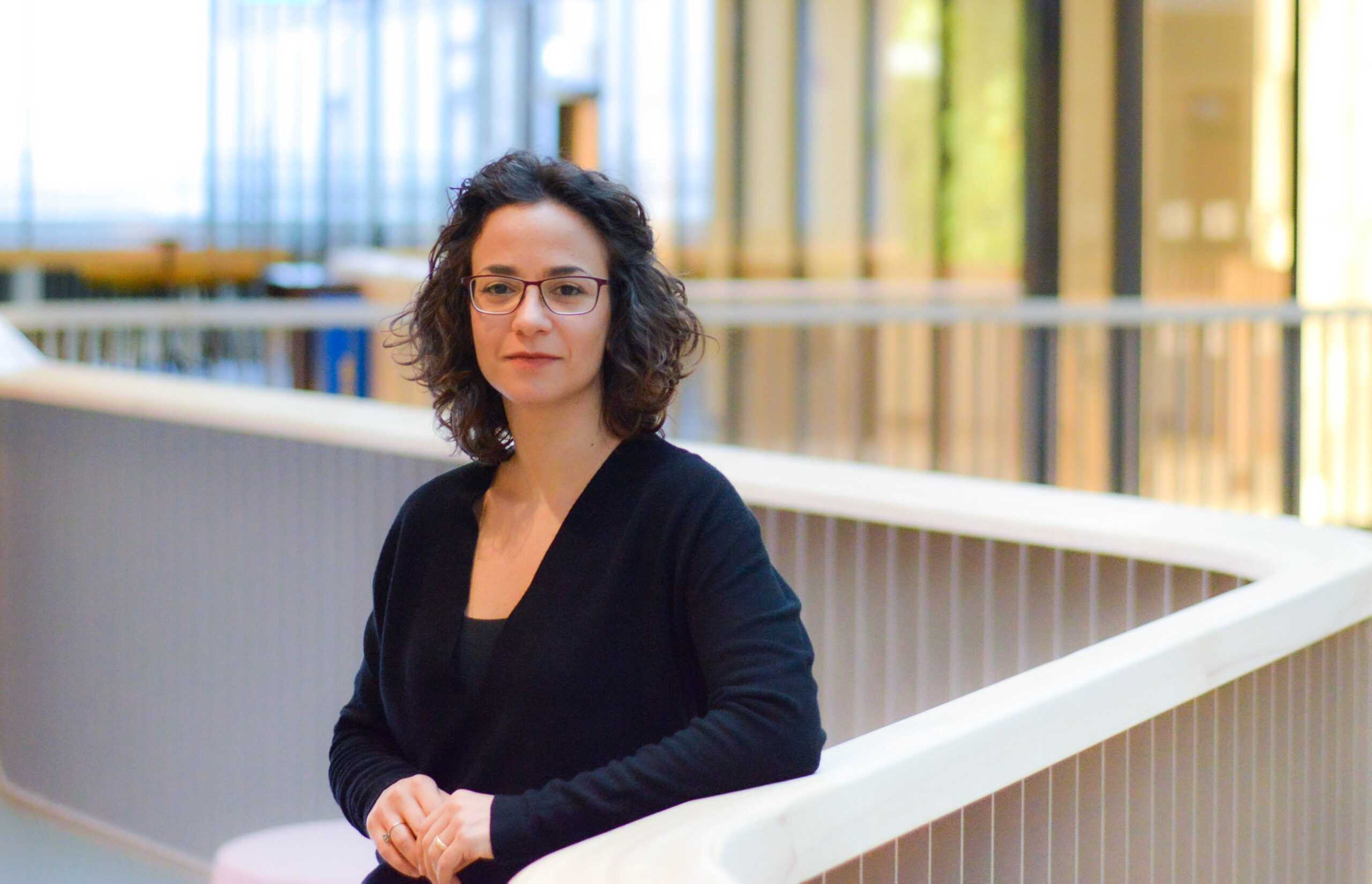
Daniela is now receiving funding from the Ragnar Söderberg foundation through the Swedish Foundations’ Starting Grant (SFSG) for the project Can fluctuations in oestradiol change how we perceive the world around us? Daniela is a neuroscientist and assistant professor who studies how neural circuits in the brain regulate emotions, stress and behaviour. Her research combines systems neuroscience, molecular biology and endocrinology to understand how the brain processes emotional stimuli and how these processes may be linked to mental health conditions such as anxiety and depression.
Girls are affected twice as often
“During adolescence, the brain develops rapidly while hormone levels are also changing. It is a period when we are particularly sensitive to stress, and negative experiences can have long-lasting effects. Girls are affected about twice as often as boys, suggesting that sex hormones may influence how the brain processes emotions. Stress and negative life events during this period are critical risk factors for behavioural changes and the development of chronic anxiety disorders,” says Daniela.
Daniela now lives in Linköping and runs her own laboratory at CSAN. Here, knowledge and methods from different areas of neuroscience are integrated to understand how the brain and its cells drive emotional behaviour.
“This is a unique environment where basic researchers work side by side with clinicians. Although my work is fundamentally about understanding how the brain functions, I hope this environment will help bridge the gap between basic research and real-world impact. In this way, our work can contribute to better, more effective and more personalised treatments for psychiatric disorders,” says Daniela.
“I study the brain circuits involved in emotions and motivation, as well as hormones such as oestrogen and their role in the brain’s emotional systems. In my research, I investigate how oestrogen affects the brain circuits that assign emotional significance to our experiences – in other words, that determine what feels safe, threatening or stressful. Among other things, I have identified a previously unknown oestrogen-sensitive circuit in the cerebral cortex that responds to stress and contributes to negative emotional states,” Daniela explains.
Why are some people more affected by stress?
Research shows that hormonal fluctuations during puberty can affect these circuits in ways that increase the risk of anxiety. During adolescence, the brain’s long-term functions are being shaped and are particularly sensitive to hormonal changes and environmental stressors.
“We want to understand why some individuals become more vulnerable to anxiety and identify new targets for more precise and effective treatments. The experience of anxiety is not the same for everyone. We respond to stress differently. That is why we need to understand why we experience anxiety, why some people develop long-term anxiety, while others cope well with an acute anxiety-provoking situation.”
“I realised early on that the oestrogen produced during adolescence is linked to anxiety. Hormones affect us at many stages of life, including puberty, menstruation and the menopause. These hormonal changes can contribute to depression both early and later in life.”
“The brain develops over a long period of time, and we do not know why we respond so differently,” says Daniela.
How does the cortex communicate?
Daniela’s lab investigates how oestrogen-sensitive neurons in the cortex communicate with other areas of the brain, how hormonal changes affect their activity and how stress early in life can disrupt these processes.
“I study how oestrogen-sensitive circuits in the cortex, a part of the brain within the cerebral cortex, affect emotional processing and stress-related anxiety disorders. They play an important role in linking the body’s internal state to emotions and behaviour. The cortex is an important part of the brain for studying emotions. It is where we make decisions, such as which route to take to work and the choices we make in life, and where feelings such as loneliness and depression arise,” says Daniela.
The aim of the research
“Our aim is to understand the mechanisms behind adolescents’ increased sensitivity to stress and identify new therapeutic targets for psychiatric disorders. Perhaps our studies could lead to new medicines that help people with mental health problems achieve better health. My overall goal is to learn more about how the brain works, why we behave the way we do and what happens in the brain,” says Daniela.
SFSG – a pathway towards ERC funding
Daniela is one of five researchers receiving a Swedish Foundations’ Starting Grant (SFSG). SFSG is a collaboration between seven private research funders that supports early-career researchers with the potential to become leaders in their fields. The call is aimed at researchers based in Sweden whose ERC Starting Grant applications received the highest rating but who were not awarded funding due to the ERC’s limited budget.
The first academic in her family
Daniela comes from a village in Marche, east of Rome, Italy. She first studied biology and later neuroscience, completing both her bachelor’s and master’s degrees in Italy. She then moved to Sweden and completed her PhD in neuroscience through the Karolinska Institutet–NIH Doctoral Partnership Programme in Neuroscience, with research conducted at Karolinska Institutet, in Vienna, Austria, and in Washington, DC, USA.
“I am the first person in my large family to attend university. My parents encouraged me from an early age to study and work with things that interested me and made me happy – to pursue what I was passionate about. Research is a little like solving puzzles, but even more exciting, because you discover things that no one has understood before. There is a real joy in turning something confusing into something clear through your own effort and perseverance,” Daniela concludes.
Read more about Daniela’s research on the Calvigioni Lab website.
Under the heading Meet a Researcher, we publish interviews with researchers who have received funding from the foundation. Earlier this year, we interviewed Emma Bell and Autilia Arfwidsson.
Last year, we interviewed Eszter Lakatos, Alexander Pietras, Julian Nowag, Hanna Almlöf, Konrad Burchardi, Sofia Lodén (Young Academy of Sweden) and Anni Carlsson.
In 2024, we interviewed Agnes Hellner, Anna Brattström, Erik Lindqvist, Suraya Kazi, Mia Phillipson, Wei-Li Hong, Vicente Pelechano and Annika Lindskog.


