12 November, 2026 | Economic sciences
How has the Swedish model affected wages, firms and innovation? Har den här konversationen varit till hjälp hittills?
This project examines how the Swedish labour market model shaped working life and the economy in Sweden during the 20th century. The model is characterised by strong trade unions and centralised wage bargaining. From the early 1980s onwards, the system was gradually decentralised, leading to changes in wage structures, firms and innovation.
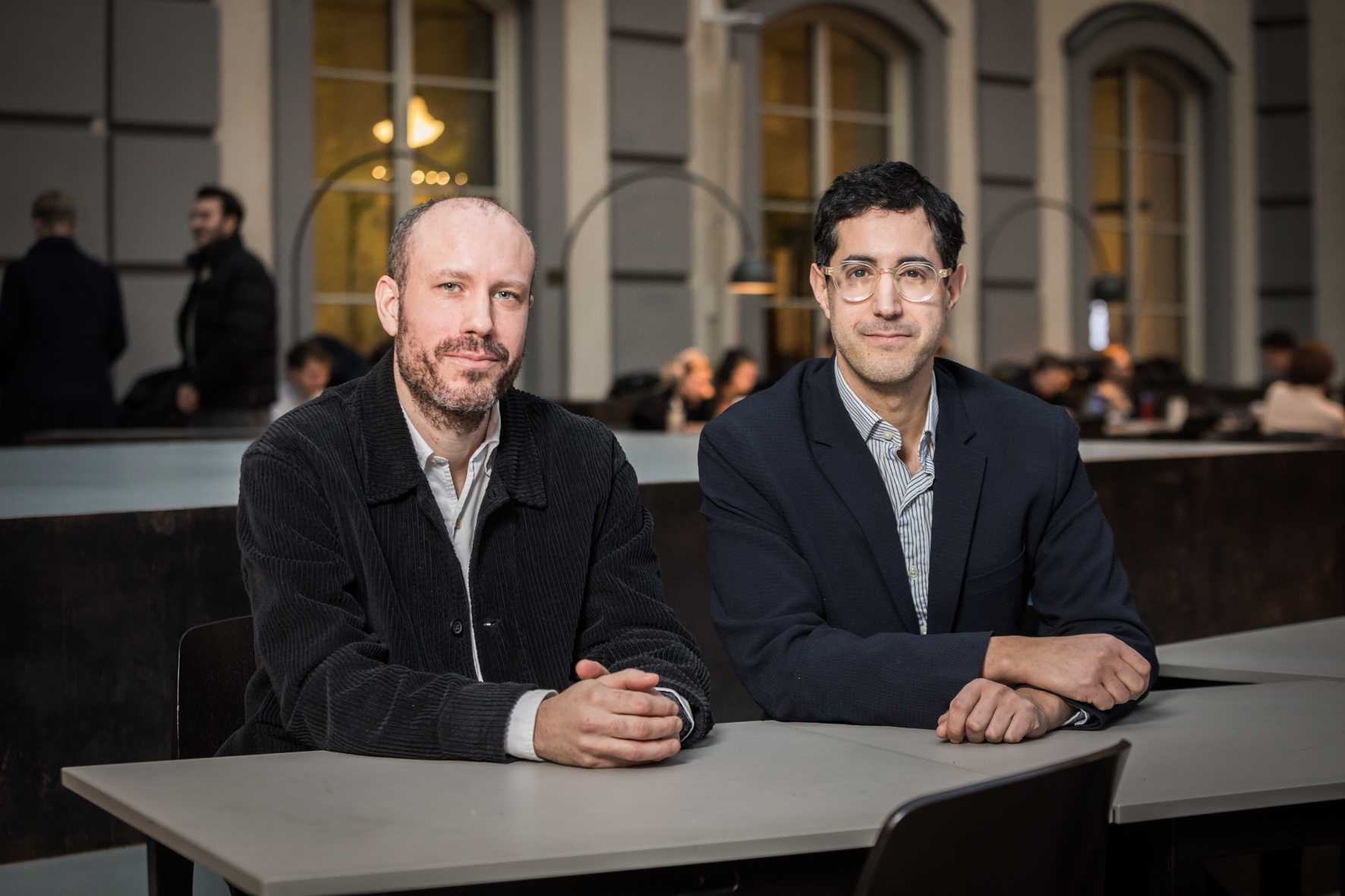
“We will analyse and link data from digitised collective agreements, statistics on wages and workplaces, and information on trade union membership. The project will also examine population and business registers, as well as patent data for both companies and individuals. This material will allow us to track how the labour market and business sector have developed over time,” says Mounir Karadja, assistant professor at the Department of Economics at Uppsala University and affiliated with the Uppsala Immigration Lab.
Together with Erik Prawitz, associate professor and senior lecturer at the Department of Economics and Statistics at Linnaeus University in Växjö and a researcher at the Research Institute of Industrial Economics (IFN), he is leading the project on the Swedish model.
AI opens up new possibilities
“For example, we link collective agreements, processed using AI, with a historical database based in part on Swedish factory data from the twentieth century onwards. We are now developing this database further,” Mounir explains. He notes that the Ragnar Söderberg foundation has previously supported research projects involving this factory data.
“Today, AI can help us extract more than just numbers. It can interpret text and give us a broader picture of what was agreed. We can examine conditions across different industries and carry out comparative analyses. That would have been difficult ten years ago. AI can help us build a detailed picture of the Swedish economy throughout the twentieth century,” says Mounir.
“In 2025, we received a project grant in economic sciences from the Ragnar Söderberg foundation for the four-year project ‘The Swedish Model: New data and methods to understand the impact of collective bargaining on workers, firms and innovation.’”
The project has three parts
The first study maps how wage bargaining changed over time and across different industries, and how these changes affected wage levels and wage differentials. In the second study, the research group will investigate how companies responded to centralised wage bargaining and reduced wage dispersion.
“We want to investigate how companies responded to the emergence of the Swedish model. How were productivity and demand for labour affected? One possible hypothesis is that less productive companies were forced to close and that workers moved to more productive companies, but that is far from certain,” Erik explains.
The third study focuses on individuals. It analyses how young people who encountered coordinated wage-setting early in life were affected in their educational choices and their opportunities for upward mobility compared with their parents. For example, how did a young person respond to being unable to earn more than the wage set by collective agreement?
A database open to all researchers
The research project will also create an open database that researchers and other interested users can access.
“The aim is to generate new knowledge about how the rules governing the labour market affect both economic development and people’s opportunities in life,” says Erik.
“We want to understand more about how we should think about the relationship between companies and workers today. How can the interests of the different parties be balanced?” Mounir asks.
A strong research partnership
“Mounir and I met while we were PhD students at Stockholm University, and we enjoy working together because our skills complement each other very well. We share both responsibility and commitment. For this project, we are creating a broader research group that includes a macroeconomist and two economic historians,” says Erik.
Erik completed his bachelor’s and master’s degrees at Stockholm University and received his PhD from the Institute for International Economic Studies (IIES) at Stockholm University.
“I have always had a strong interest in society, which eventually led me to the PhD programme at Stockholm University. That was where I became interested in economic history and, among other things, studied Sweden’s economic and political development during industrialisation,” says Erik.
“My interest in the relationship between economics and politics led me to study economics at Uppsala University, where I also completed my bachelor’s degree. After a master’s degree at the Paris School of Economics, I received my PhD from IIES at Stockholm University,” Mounir explains.
“My interest in politics developed gradually. I have never belonged to a political party, but I have always been a member of Amnesty International. My parents are from Algeria, and I became interested in development issues and poverty reduction at an early age. My research areas are economic development, political economy and economic history, with a particular focus on migration. I study the causes and consequences of migration, as well as how the integration of immigrants can be improved,” says Mounir.
“Together, we have studied the consequences of migration and taken an interest in the large-scale emigration from Sweden to North America during the second half of the nineteenth century. Among other things, we examined the link between emigration and the emergence of the labour movement,” says Erik.
“So the idea of researching the Swedish model has been with both of us for many years. The Ragnar Söderberg foundation grant is an excellent fit for this approach, which is built around a large project with several different components,” Mounir and Erik conclude.
Under the heading Meet a Researcher, we publish interviews with researchers who have received funding from the foundation. Earlier this year, we interviewed Moa Lidén, Jaakko Meriläinen, Céline Zipfel and Jay Eui Jung Lee, Antoaneta Momcheva and Iman Parsa, Monica Svantesson, Daniela Calvigioni, Autilia Arfwidsson and Emma Bell.
Last year, we interviewed Eszter Lakatos, Alexander Pietras, Julian Nowag, Hanna Almlöf, Konrad Burchardi, Sofia Lodén (Young Academy of Sweden) and Anni Carlsson.
In 2024, we interviewed Agnes Hellner, Anna Brattström, Erik Lindqvist, Suraya Kazi, Mia Phillipson, Wei-Li Hong, Vicente Pelechano and Annika Lindskog.