21 August, 2024 | Medicine
Mia explores the unknown functions of immune cells
“Immune cells are involved in most diseases, but we still do not fully understand what they actually do in different situations. That is what my research aims to uncover. We want to understand which molecules regulate the various functions of immune cells so that we can develop new immunotherapies and ultimately cure different diseases,” says Mia Phillipson, professor of physiology at the Department of Medical Cell Biology at Uppsala University.
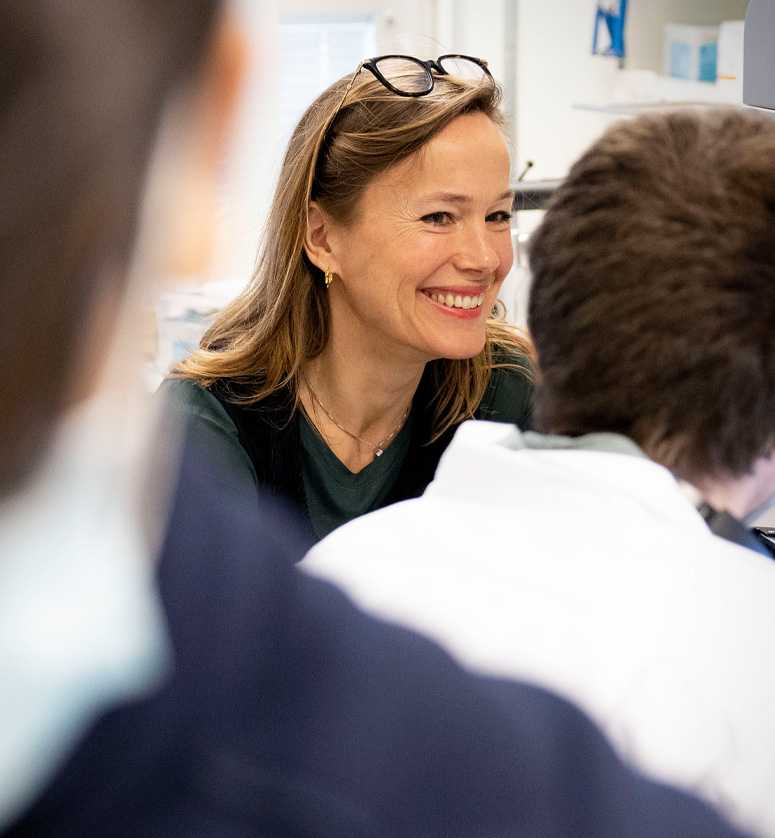
Mia’s research focuses on increasing our understanding of immune cells and then developing drugs that harness their functions to treat inflammatory bowel disease, diabetes, cancer, cardiovascular disease and hard-to-heal wounds.
“Our immune system is vital for fighting infections, while uncontrolled inflammatory processes contribute to many common diseases. We have also come to realise that immune cells are essential for the body’s organs to develop and function properly, and that they are needed for damaged tissue to heal and regain its function after injury,” Mia explains.
Ragnar Söderberg Fellow in Medicine
“I received my five-year Ragnar Söderberg Fellow in Medicine grant in 2012. The purpose of the programme was to give early-career researchers a stable platform and the opportunity to focus wholeheartedly on their research. It really gave me a strong start to my career and also provided me with a network of researchers at the same career stage, with whom I am still in contact,” Mia says.
Mia’s project aimed to understand how immune cells move from the blood into inflamed or damaged tissue. The first research findings revealed new functions of certain immune cells, including their involvement in the formation of new blood vessels, which is necessary to prevent oxygen deprivation and tissue death.
“For example, we found that immune cells are needed to restore the vascular system in transplanted insulin-producing cell clusters, known as islets of Langerhans, when transplanted into muscle. An incidental finding was that the islets transplanted into muscle regained the dense network of blood vessels they need to function optimally in the new host. These observations subsequently led to a clinical study investigating whether islet transplantation into muscle could be a way of curing diabetes,” Mia explains.
Immune cells find oxygen-deprived areas
Since the first evidence that immune cells are involved in the formation of new blood vessels, Mia’s research group has continued to investigate what immune cells do in damaged tissue and how these functions can be controlled, with the overarching aim of developing drugs that can prevent loss of function. One long-term goal is to stimulate the healing capacity of immune cells in patients who have suffered a heart attack or peripheral ischaemic disease, enabling their bodies to repair the damaged tissue themselves.
“The ambition has always been to increase our understanding of the different roles of immune cells so that we can control the immune system and reduce disease. Another strong motivation has been to create a creative environment in the laboratory where new hypotheses can be tested quickly, and to provide the conditions for doctoral students involved in the project to develop into successful researchers of the future. These ambitious goals require generous, long-term funding, such as the fellowship programmes offered by Ragnar Söderberg foundation and the Knut and Alice Wallenberg Foundation,” Mia says.
Academic freedom promotes innovation
“My research is about understanding the full potential of immune cells. Thanks to the substantial long-term grants I received, some projects could be protected by patents before the results were published, which is essential if they are ultimately to lead to a drug. One of these projects investigated whether we could make wounds heal faster by using probiotic bacteria – lactobacilli – that we genetically modified to produce a signalling molecule in the wound to stimulate immune cells,” Mia explains.
“I will never forget the first experiments we conducted in anaesthetised mice, when we saw dramatic effects in wounds that closed after just one day following treatment with the bacteria.”
To develop this into a therapy for patients, I co-founded Ilya Pharma together with my doctoral student Evelina Vågesjö and Stefan Roos, an expert in lactobacilli at the Swedish University of Agricultural Sciences.
“We have now completed the world’s first clinical trial in which bacteria are tested as a drug to accelerate wound healing in humans. The study was conducted at Uppsala University Hospital, and the results, published last year, showed that the treatment was safe and effective in healthy volunteers. The next clinical trial is now under way, and we are recruiting patients with hard-to-heal diabetic wounds. We have also found positive effects of the treatment on wounds in the intestinal mucosa of mice, which we are now investigating further,” Mia explains.
SciLifeLab and Uppsala University
For the past few years, Mia has also served as co-director of the national research infrastructure SciLifeLab. It brings together the latest technologies within strong research environments, enabling them to continue to develop and to be used by life science researchers in academia, as well as in healthcare and industry.
“SciLifeLab brings together many of the areas of expertise and components needed to conduct ambitious research projects and address the societal challenges we face. These include high-tech analytical methods, the management of large volumes of research data and interdisciplinary collaborations between strong research groups at all of Sweden’s major universities. Although SciLifeLab takes up a considerable amount of my time, I believe that my involvement there also improves the quality of the research conducted by my own research group, because I am constantly learning new things. I also think it is very important to work to improve the conditions for conducting world-class research, which is very much SciLifeLab’s vision,” Mia concludes.
This commitment has also led Mia to serve on the board of Uppsala University and to be elected a member of both the Royal Swedish Academy of Sciences and the Royal Society of Sciences at Uppsala.
Mia Phillipson was one of the first researchers to receive funding through the Ragnar Söderberg Fellows in Medicine programme, which ran from 2012 to 2018. The initiative was designed to address the need for funding among researchers in medicine and life science who were in the process of establishing their own research groups and developing independent research programmes.
Under the heading Meet a researcher, we publish interviews with researchers who have received grants from the foundation. This is the fifth in a series of interviews published in 2024.
The first featured Agnes Hellner.
The second featured Anna Brattström.
The third featured Erik Lindqvist.
The fourth featured Suraya Kazi.
The sixth featured Wei-Li Hong.
The seventh featured Vicente Pelechano.
The eighth featured Annika Lindskog.