27 August, 2025 | Law
Freedom of expression for an open and functioning democracy
– The most popular social media platforms are owned by private companies today. This creates new challenges for the constitutional protection of freedom of expression, says Anni Carlsson, PhD in constitutional law and lecturer at the Department of Operational Law and International Law at the Swedish Defence University.
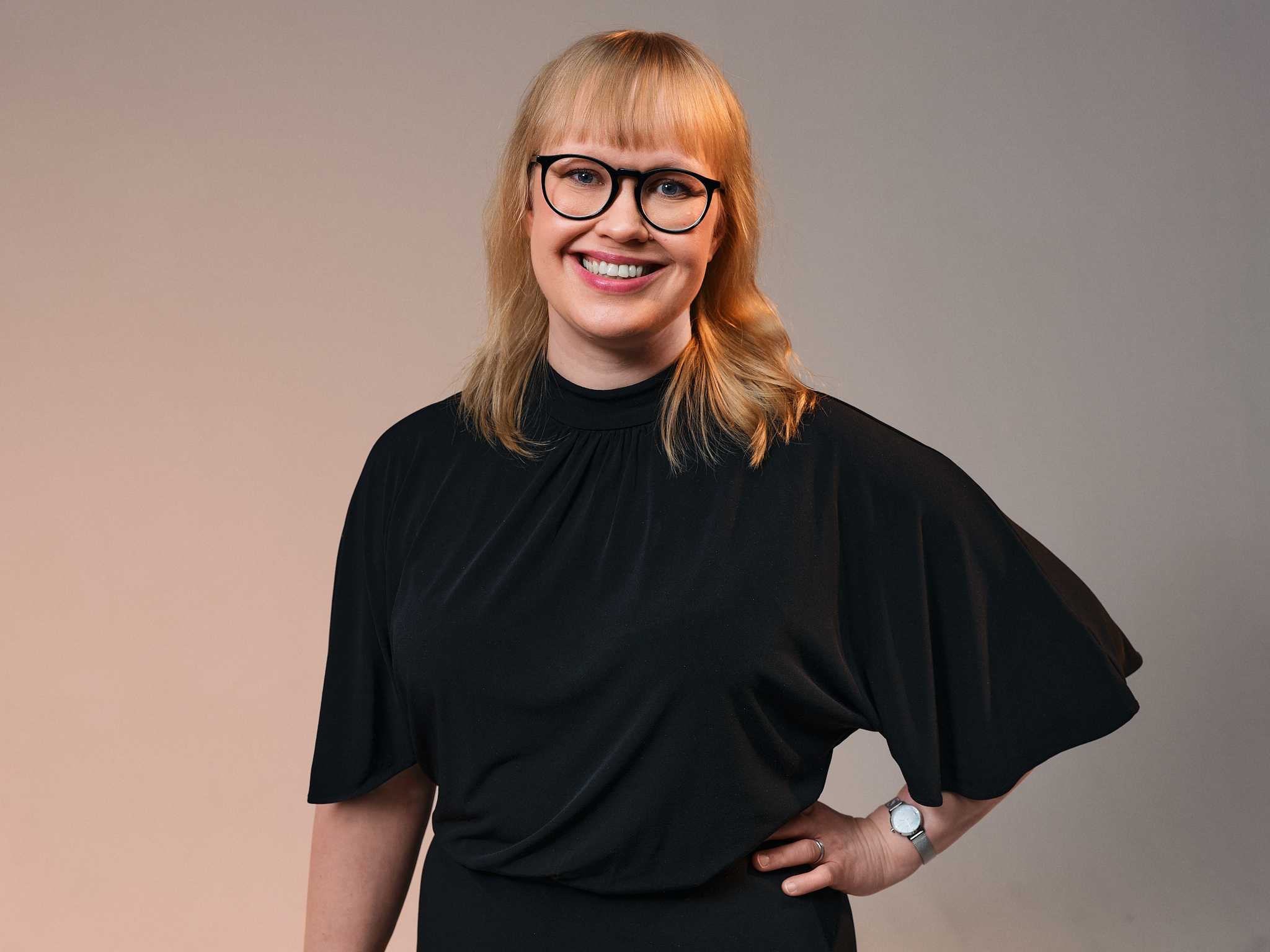
Photo: Tobias Björkegren
Social media platforms are becoming increasingly important arenas for communication in today’s society. They both enable and restrict users’ exercise of freedom of expression.
“That is why I am interested in how the constitutional right to freedom of expression has been, and should be, adapted to the new communications landscape dominated by social media,” Anni says.
Freedom of expression is a fundamental right
Freedom of expression is one of the most fundamental rights protected by constitutions around the world. Constitutional protection of freedom of expression has traditionally applied primarily in relation to the state, limiting the ability of public authorities to restrict individuals’ expression. In today’s society, however, privately owned social media platforms have considerable power over what individuals can disseminate and access. Through content moderation, popular platforms such as Facebook and X set boundaries for what can and cannot be said in public discourse.
“My aim has been to examine what mechanisms the constitutional protection of freedom of expression provides for addressing this new situation, in which privately owned global companies, and not only the state, have the power to determine the boundaries of freedom of expression in society,” Anni explains.
International perspectives
Anni has compared how the constitutional protection of freedom of expression has been adapted to social media in a number of different legal systems. She has studied US, German and Swedish law, as well as how the issue has been addressed under the European Convention on Human Rights and EU law.
“In the United States, a key issue has been whether social media platforms themselves can invoke their right to freedom of expression. For example, is Facebook exercising its freedom of expression when it chooses to remove a post? In Europe, there has been a greater focus on balancing the competing interests of platforms and users,” Anni says.
Sweden stands out for its detailed regulation of freedom of expression in the Freedom of the Press Act and the Fundamental Law on Freedom of Expression. So far, incorporating social media within the framework of Sweden’s fundamental laws on freedom of expression has proved challenging.
Public service media in peacetime, crisis and war
In her postdoctoral project, funded by the foundation, Anni will study the legal regulation of public service media in peacetime, during crises and in wartime. The project will analyse and critically examine the legal rules governing Sweden’s public service media: SVT, SR and UR.
“One particularly interesting question is the government’s ability to exercise control over public service media when Sweden is at war or at risk of war. I will examine the relationship between the constitutional protection of public service media’s freedom of expression and the state’s ability to govern their activities,” Anni says.
“The role of public service media in combating disinformation is another key issue. I will also analyse what protection public service media have against potential attempts by authoritarian political forces to control their activities, as well as compare Sweden’s regulation of public service media with that of other countries.”
Limited research in the field
“There is relatively little research on freedom of expression in public service media from a legal perspective. I read a newspaper article highlighting uncertainties about the extent to which the government can control public service media during crises and war, which made me even more interested in the subject,” Anni says. “One of my aims is therefore to produce a comprehensive analysis of the legal rules governing public service media in Sweden.”
By examining the government’s ability to govern public service media during crises, such as pandemics and terrorist attacks, as well as during wartime, Anni hopes that her research can contribute to strengthening Sweden’s capacity to manage future crises and its total defence.
“Given that the regulatory framework is changing and that public service media have become increasingly important because of the uncertain international security environment, this is particularly important today,” Anni says.
An interest in society led to law
“I have always been interested in societal issues, and I think law provides a broad and useful perspective for understanding social phenomena.”
Researching issues relating to freedom of expression, human rights and constitutional law was also something Anni began considering quite early on.
Anni was born in Järvenpää, Finland, north of Helsinki. After upper secondary school, she moved to Sweden and studied law at Uppsala University. After graduating, she completed her judicial clerkship in Uppsala before beginning her doctoral studies at Uppsala University. During her PhD, Anni spent periods abroad as a visiting researcher, including at the University of California, Berkeley in the United States and Humboldt-Universität zu Berlin in Germany. She also became a mother of three boys during her doctoral studies.
“Completing my thesis took a little longer because of the children, but that also gave me a valuable perspective, as a great deal happened in social media during those years. The Swedish Defence University advertised a position when I was in the final stages of my PhD. I had heard that it had a strong teaching and research environment, so the position was a perfect fit,” Anni concludes.
Anni was awarded funding in the 2024 call for postdoctoral grants in law and began her project on public service media at the Swedish Defence University in September 2025.
Under the heading Meet a researcher, we publish interviews with researchers who have received grants from the foundation. This is the fifth researcher profile of the year. Previous interviews this year have featured Julian Nowag, Hanna Almlöf, Konrad Burchardi and Sofia Lodén (the Young Academy of Sweden).
Last year, we interviewed Agnes Hellner, Anna Brattström, Erik Lindqvist, Suraya Kazi, Mia Phillipson, Wei-Li Hong, Vicente Pelechano and Annika Lindskog.