21 April, 2022 | Special initiatives
Major grant awarded for research into how a marine mineral regulates carbon dioxide
Every year, around 4,000 of Europe’s leading early-career researchers compete for the prestigious and generously funded Starting Grants awarded by the European Research Council (ERC). Competition is fierce, and even researchers in the highest-ranked “A” category can fall at the final hurdle when the ERC’s budget is insufficient to fund them all.
To support such talented researchers and prevent them from losing valuable momentum and motivation in their work, a group of private Swedish research funders launched the Swedish Foundations Starting Grant (SFSG) initiative in 2015. Through a targeted call, researchers who have received the highest ratings from the ERC are offered another opportunity to secure funding at the national level. This year, two grants have been awarded, totalling just over SEK 29 million.
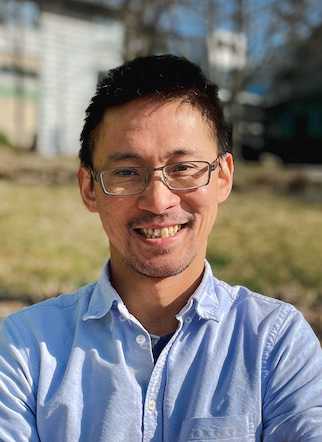
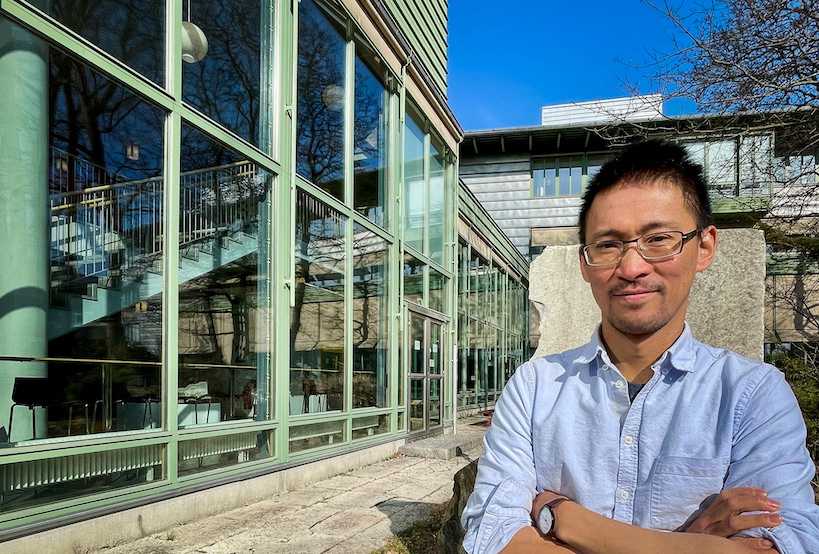
The successful recipients are geologist Wei-Li Hong at Stockholm University (funded by Ragnar Söderbergs stiftelse) and physicist Agnese Bissi at Uppsala University (funded by Olle Engkvists Stiftelse).
Wei-Li Hong has been awarded up to SEK 14 million over a five-year period* for the research project Silicate alteration in marine sediments: rate, pathway, and significance, which explores how silicates, some of the most abundant minerals on our planet, neutralise carbon dioxide. More than 90% of the Earth’s crust and upper mantle consists of silicon-oxygen compounds known as silicates, which have quietly regulated carbon dioxide levels on our planet for billions of years – yet we still know remarkably little about the chemistry behind this process. This is particularly true of silicates found in deep-sea sediments, which represent the largest reservoir of these minerals after those found in the Earth’s crust.
In his laboratory at Stockholm University, Wei-Li Hong aims to recreate the extreme conditions found on the deep ocean floor, with pressures reaching hundreds of atmospheres and temperatures below freezing, to study in greater detail how marine silicates neutralise carbon dioxide.
“This grant is definitely a step forward in my career. It gives me the resources and freedom to study what I am genuinely interested in, which is a great privilege,” says Hong. “This is particularly important because my field is so strongly driven by curiosity and involves considerable risks. I am grateful for the trust placed in me by Ragnar Söderbergs stiftelse. It gives me greater confidence to explore similar research questions in the future.”
About the call
Swedish Foundations Starting Grant (www.startinggrant.se) is a collaboration between the Erling-Persson Foundation, the Kempe Foundations, Olle Engkvists Stiftelse, Ragnar Söderbergs stiftelse, Riksbankens Jubileumsfond and the Swedish Society for Medical Research.
Grants awarded through SFSG provide funding equivalent to ERC Starting Grants (up to EUR 1.5 million over five years), with the expectation that researchers will continue to apply for relevant ERC grants throughout the project period. The aim of SFSG is not to replace EU funding, but to encourage more talented researchers at Swedish universities to participate in ERC calls. In the long term, this will benefit both individual researchers and Swedish research as a whole.
The Swedish Research Council has a funding initiative for highly ranked researchers in Sweden who are on the ERC reserve list. The two initiatives are coordinated to maximise their impact. Since 2015, 21 early-career researchers have been awarded a total of nearly SEK 270 million through the initiative.