20 May, 2024 | Economic sciences
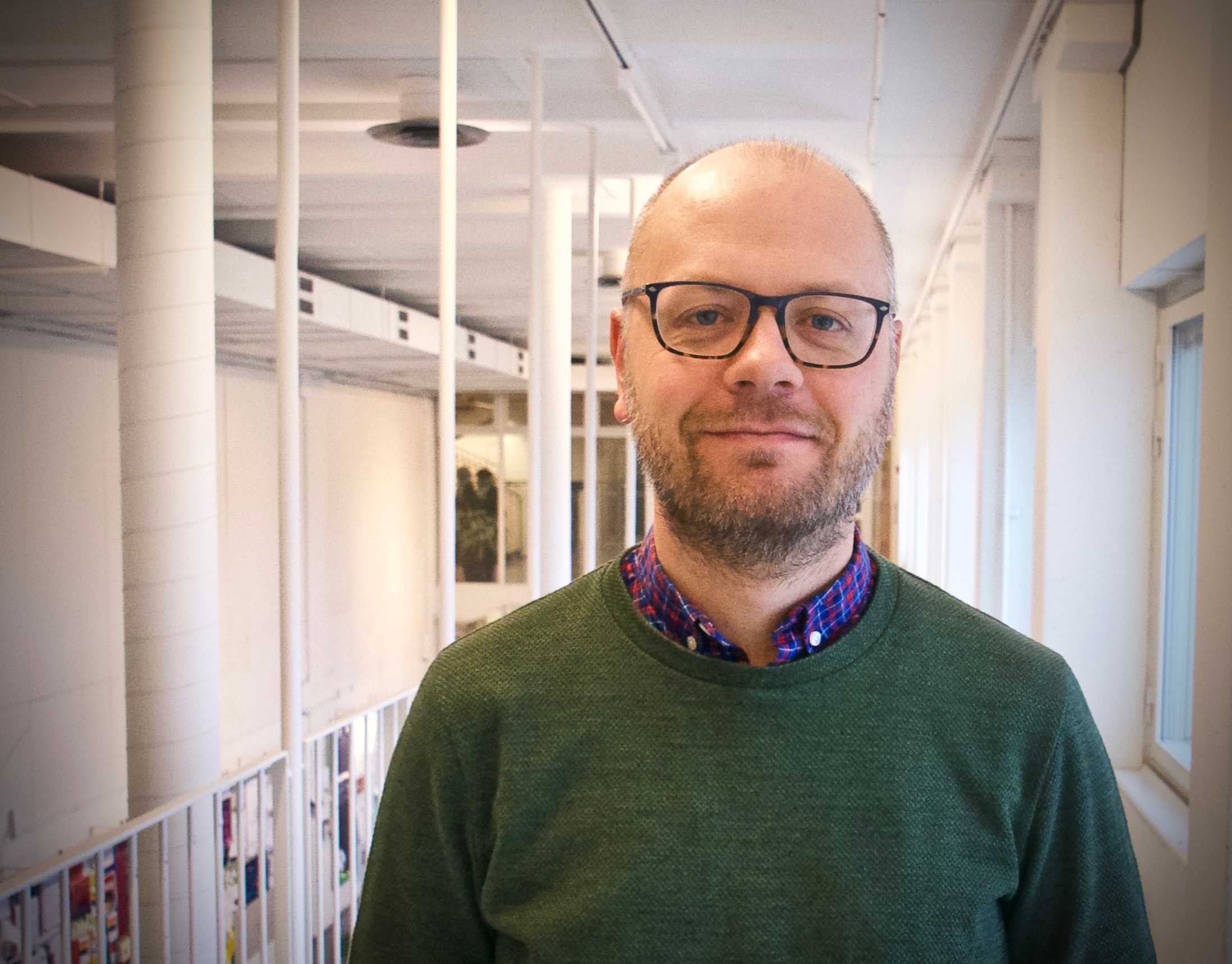
Erik Lindqvist studies how sudden wealth affects us
What actually happens to people who win the lottery and suddenly become wealthy? Do they become happier and enjoy better health? Do they invest their money wisely? Erik Lindqvist, professor of economics at the Swedish Institute for Social Research at Stockholm University, and his research colleagues discuss their widely acclaimed studies.
A large number of scientific studies have shown that people who are financially well off are, on average, both happier and live longer than people with limited financial resources. They have also shown that children of wealthy parents perform better at school and enjoy better health.
“However, it is difficult to distinguish cause and effect in this type of study. One reason is that income correlates with many other factors, such as educational attainment, which in turn may affect outcomes such as health and perceived happiness. Another reason is that causality may run in both directions. Good health, for example, may be a prerequisite for being able to work and earn money. It is therefore difficult to determine to what extent money itself leads to better outcomes in life. To answer that question, we chose to study a variation in wealth that is entirely random – lottery winnings,” Erik explains.
Lottery winnings and chance
Erik and his colleagues have conducted a number of widely noted studies on how sudden wealth, in the form of lottery winnings, affects individuals’ labour supply, health, well-being and much more.
“Our research on lottery winnings provides a unique opportunity to answer questions about people’s health, investment behaviour and the labour market,” Erik says.
The research group has linked anonymised records from lottery companies with data from sources such as income and crime registers. The data include around 400,000 lottery winners. Most won relatively small amounts, but more than 2,000 people won at least SEK 1 million. These individuals are fairly representative of the Swedish population as a whole – they are neither the richest nor the poorest.
What happens to people when they become wealthy?
“What is unique about lottery winners is that chance determines whether you win or not. By comparing people who won the lottery with people who bought the same number of lottery tickets but did not win, we can determine what happens specifically as a result of the money they receive. This is different from studying people who become wealthy in other ways, through inheritance, education, work or other factors. Because chance determines who wins, we can get around a difficult methodological problem,” Erik says.
Erik began collecting data on Swedish lottery winners together with Robert Östling, David Cesarini and Björn Wallace in 2010. The aim was to use lottery winnings to produce credible estimates of the effects of wealth on different behaviours. The group has studied people’s behaviour for up to 20 years after they won.
“We had been thinking for a long time about doing something with data on lottery winners. It quickly became clear to us that this was a goldmine of information – an opportunity to use random variation to answer a wide range of questions that are relevant to society and the economy,” Erik says.
Greater life satisfaction
“Our estimates of income effects are important for testing and calibrating economic models in different areas. Our results show, for example, that the effect of lottery winnings on physical health, health behaviours and children’s development is very small, or at least considerably weaker than the correlation with income might suggest. Lottery winners’ children may possibly be slightly less likely to be overweight,” Erik says.
“Lottery winnings do, however, increase life satisfaction, improve people’s financial situation and may also improve mental health, even in the long term. We find that lottery winners use fewer psychotropic medications, such as anti-anxiety medication and sleeping pills.”
People behave sensibly and rationally with money
Labour supply – how much people work – is an important parameter in understanding how tax policy and transfer systems operate in practice.
“We find that people who win the lottery work less, but the effect is fairly modest. One interesting finding, however, is that it does not seem to matter whether the winnings are paid as a lump sum or over several decades. Lottery winners appear to be forward-looking: they save a large proportion of their winnings and spread their consumption of leisure over time,” Erik says.
Investing in the stock market
“We also find that lottery winners who did not previously own shares enter the stock market. However, the effect is smaller than economic models predict. We believe the reason is that some people do not fully understand how the stock market works. This is something that should be taken into account when designing pension systems, for example. Many people may need help investing their pension savings,” Erik says.
Grant from Ragnar Söderberg foundation
Ragnar Söderberg foundation funded the project on lottery winnings from 2018 to 2024. Erik and his colleagues will continue to build on the data they have collected, exploring areas such as crime, family formation, dental health, financial risk-taking and political attitudes.
What do you say when people ask what you do?
“When fellow researchers ask, I say that I conduct research in labour economics, and they understand that this encompasses a broad research agenda. To everyone else, I say that I study lottery winnings. It’s concrete, easy to understand and often leads to an interesting conversation,” Erik concludes.
Erik Lindqvist, together with Robert Östling, David Cesarini and Björn Wallace, received a research project grant in economic sciences in 2018. Erik is currently Professor of Economics at the Swedish Institute for Social Research (SOFI), Stockholm University. Robert is Professor of Economics at the Department of Economics, Stockholm School of Economics. David is Professor of Economics at New York University’s Center for Experimental Social Science. Björn holds a PhD in Economics from the Stockholm School of Economics.
Under the heading Meet a researcher, we publish interviews with researchers who have received grants from the foundation. This is the third in a series of interviews published in 2024.
The first featured Agnes Hellner.
The second featured Anna Brattström.
The fourth featured Suraya Kazi.
The fifth featured Mia Phillipson.
The sixth featured Wei-Li Hong.
The seventh featured Vicente Pelechano.
The eighth featured Annika Lindskog.